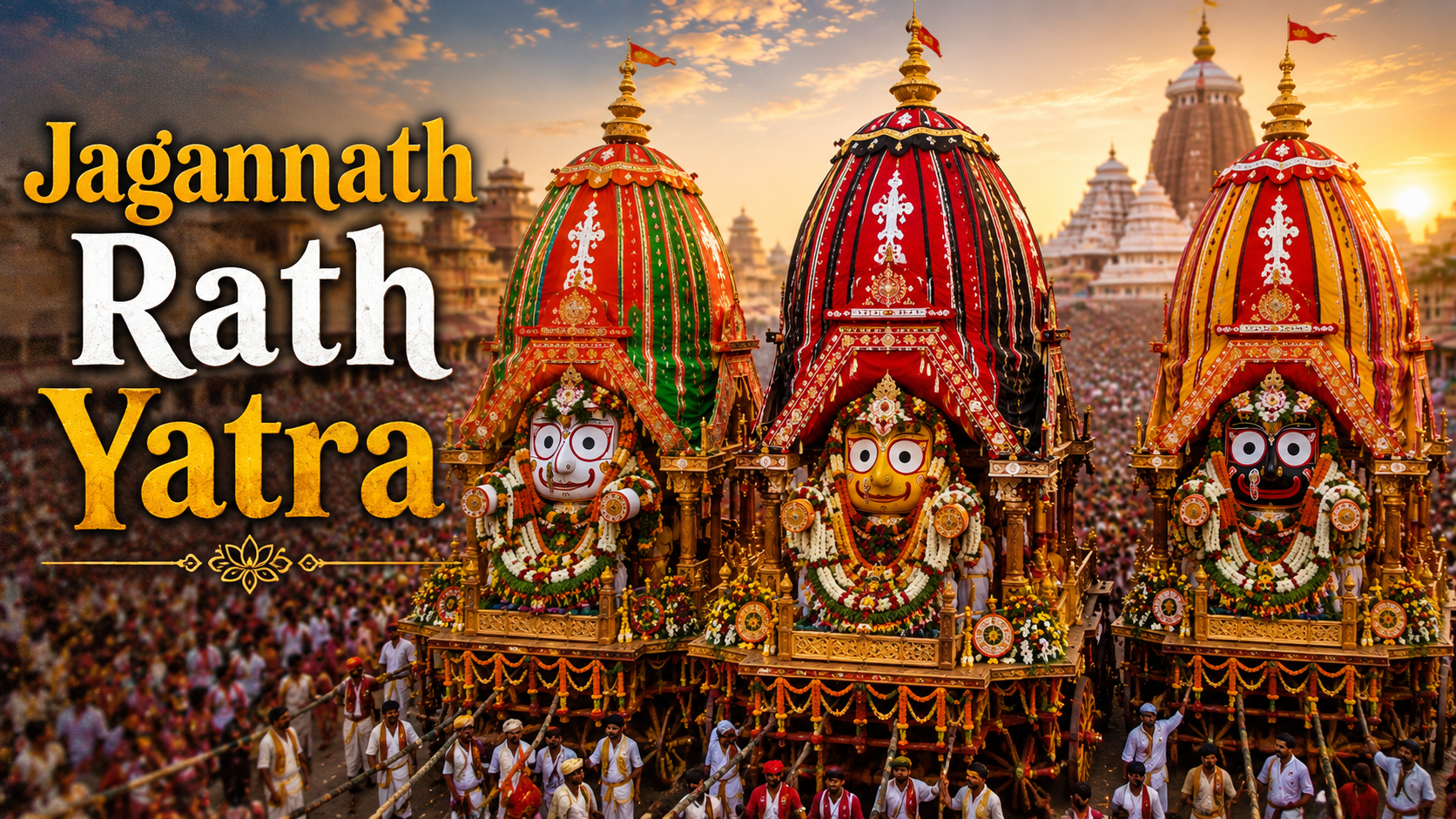
The Jagannath Rath Yatra is one of the most revered and widely celebrated festivals in Hinduism. Held annually in the sacred city of Puri in Odisha, this grand procession attracts millions of devotees from India and around the world. The festival is dedicated to Lord Jagannath, a form of Lord Krishna, along with his elder brother Lord Balabhadra and sister Devi Subhadra. More than a religious event, Rath Yatra is a celebration of devotion, humility, equality, and divine grace.
The word “Rath Yatra” literally means “Chariot Festival.” During the festival, the deities are brought out of the Jagannath Temple and placed on magnificent wooden chariots that are pulled by devotees to the Gundicha Temple. This symbolic journey represents the Lord coming out to bless all people, regardless of caste, social status, nationality, or background.
Historical Origins of Jagannath Rath Yatra
The origins of Jagannath worship are ancient and deeply rooted in Indian spiritual traditions. References to Lord Jagannath can be found in sacred texts such as the Skanda Purana, Brahma Purana, Padma Purana, and Niladri Mahodaya. According to tradition, King Indradyumna, a devoted ruler, received divine guidance to establish the worship of Lord Jagannath in Puri.
The Rath Yatra itself has been celebrated for centuries and is considered one of the oldest continuously observed religious festivals in the world. Historical records suggest that pilgrims from different parts of India traveled to Puri specifically to witness this sacred event.
Who Is Lord Jagannath?
Lord Jagannath is widely worshipped as a form of Lord Krishna, though his worship embraces many spiritual traditions. The name “Jagannath” means “Lord of the Universe.” His unique form, characterized by large round eyes and a wooden body, carries profound spiritual symbolism.
Alongside Lord Jagannath are:
• Lord Balabhadra, representing strength, protection, and righteousness.
• Devi Subhadra, representing divine compassion and harmony.
Together, they symbolize unity, family, and the universal nature of divine love.
Why Is Rath Yatra So Special?
Most Hindu temples require devotees to visit the deity within the temple premises. During Rath Yatra, however, the Lord comes out to meet the devotees. This is one of the reasons the festival holds such deep emotional significance.
The festival communicates a powerful spiritual message: the Divine is accessible to everyone. The Lord does not wait for people to come to Him; instead, He reaches out to humanity with compassion and grace.
The Three Sacred Chariots
One of the most remarkable aspects of Rath Yatra is the construction of three enormous wooden chariots. These chariots are rebuilt every year according to traditional specifications that have been preserved for generations.
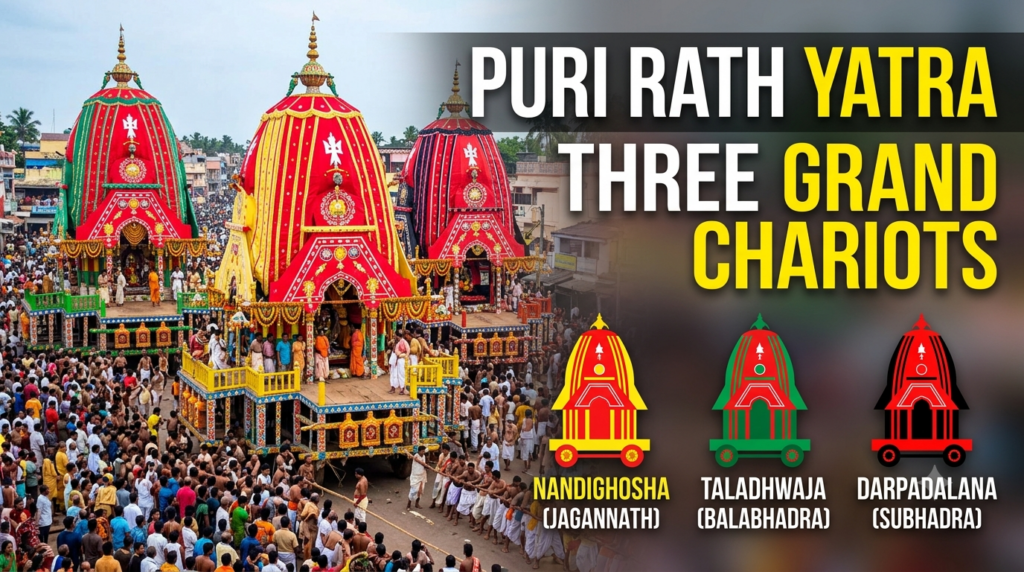
Nandighosha – Chariot of Lord Jagannath
This is the largest of the three chariots and is recognized by its red and yellow canopy. It traditionally has sixteen wheels and serves as the vehicle of Lord Jagannath.
Taladhwaja – Chariot of Lord Balabhadra
Decorated with red and green colors, this chariot has fourteen wheels and carries Lord Balabhadra.
Darpadalana (Devadalana) – Chariot of Devi Subhadra
The smallest of the three, this chariot is distinguished by its red and black canopy and twelve wheels.
The construction of these chariots is itself considered a sacred ritual. Skilled artisans follow centuries-old traditions and use specific types of wood selected according to religious guidelines.
Major Rituals Associated with Rath Yatra
Snana Purnima
The preparations for Rath Yatra begin with Snana Purnima. During this ceremony, the deities are bathed with 108 pots of sanctified water. This grand ritual symbolizes purification and divine blessings.
Anavasara
After the ceremonial bath, the deities are believed to become unwell and withdraw from public view. This period, known as Anavasara, lasts for several days. Devotees eagerly await the reappearance of the deities.
Netrotsava
Before the Rath Yatra begins, a special ritual known as Netrotsava is performed. It symbolizes the restoration of the divine vision of the deities.
Pahandi Procession
On the day of the festival, the deities are ceremonially carried from the temple sanctum to their respective chariots. This ritual, called Pahandi, is accompanied by devotional singing, dancing, and the chanting of sacred names.
Chhera Pahanra
One of the most significant rituals is Chhera Pahanra, where the Gajapati King of Puri sweeps the platforms of the chariots with a golden broom. This act symbolizes humility and demonstrates that all people are equal before God.
The Grand Procession
Once the deities are seated on their chariots, devotees pull the massive structures through the streets of Puri toward the Gundicha Temple. The atmosphere is filled with devotion, music, and celebration.
Bahuda Yatra
After spending several days at the Gundicha Temple, the deities begin their return journey to the Jagannath Temple. This return procession is known as Bahuda Yatra.
Suna Besha
Following the return journey, the deities are adorned with magnificent gold ornaments in a ritual known as Suna Besha. Thousands gather to witness this spectacular display.
Niladri Bije
The festival concludes with Niladri Bije, marking the ceremonial return of the deities to the sanctum of the Jagannath Temple.
Spiritual Significance of Rath Yatra
The Jagannath Rath Yatra is rich in symbolism and spiritual meaning.
The Chariot as the Human Body
Many spiritual teachers interpret the chariot as a symbol of the human body. The journey represents the soul’s movement toward spiritual awakening and divine realization.
The Rope of Devotion
The ropes used to pull the chariots symbolize devotion and surrender. By holding the rope, devotees express their desire to move closer to God.
Universal Compassion
Rath Yatra emphasizes that divine grace is available to everyone. The Lord leaves the temple and comes among the people, reinforcing the ideals of inclusiveness and compassion.
Humility and Service
The Chhera Pahanra ritual teaches that even kings are servants of the Divine. It serves as a reminder that humility is one of the highest spiritual virtues.
Connection with Lord Krishna
Many traditions identify Lord Jagannath as Lord Krishna. According to devotional interpretations, the festival also commemorates Krishna’s desire to visit His devotees. This connection makes Rath Yatra especially important within Vaishnavism.
Sri Chaitanya Mahaprabhu, one of the most influential saints of the Bhakti movement, participated in the Puri Rath Yatra and expressed profound devotion during the festival. His association helped spread the fame of Rath Yatra throughout India and beyond.
Interesting Facts About Jagannath Rath Yatra
- The Jagannath Temple in Puri is one of the Char Dham pilgrimage sites of Hinduism.
- The three chariots are constructed anew every year.
- Millions of pilgrims visit Puri during the festival.
- The festival is among the largest religious gatherings in the world.
- Pulling the chariot ropes is considered highly auspicious.
- Rath Yatra has inspired similar chariot festivals in many countries.
- Traditional construction methods are preserved and passed down through generations of artisans.
Lessons from Rath Yatra for Modern Life
The teachings of Rath Yatra remain relevant even today.
- First, it reminds people to cultivate humility regardless of status or success.
- Second, it teaches the importance of community and collective effort. The chariots move only when thousands work together.
- Third, it encourages devotion, faith, and perseverance on the spiritual path.Finally, it highlights the importance of inclusiveness and treating all people with respect and compassion.
Conclusion
The Jagannath Rath Yatra is far more than a grand religious procession. It is a living tradition that embodies faith, devotion, equality, and divine compassion. Through the annual journey of Lord Jagannath, Lord Balabhadra, and Devi Subhadra, devotees experience a powerful reminder that God is accessible to everyone.
For centuries, the festival has inspired millions with its message of unity and spiritual awakening. Whether viewed from a historical, cultural, or devotional perspective, Rath Yatra continues to stand as one of the most extraordinary celebrations in Hinduism and a timeless expression of humanity’s connection with the Divine.
