


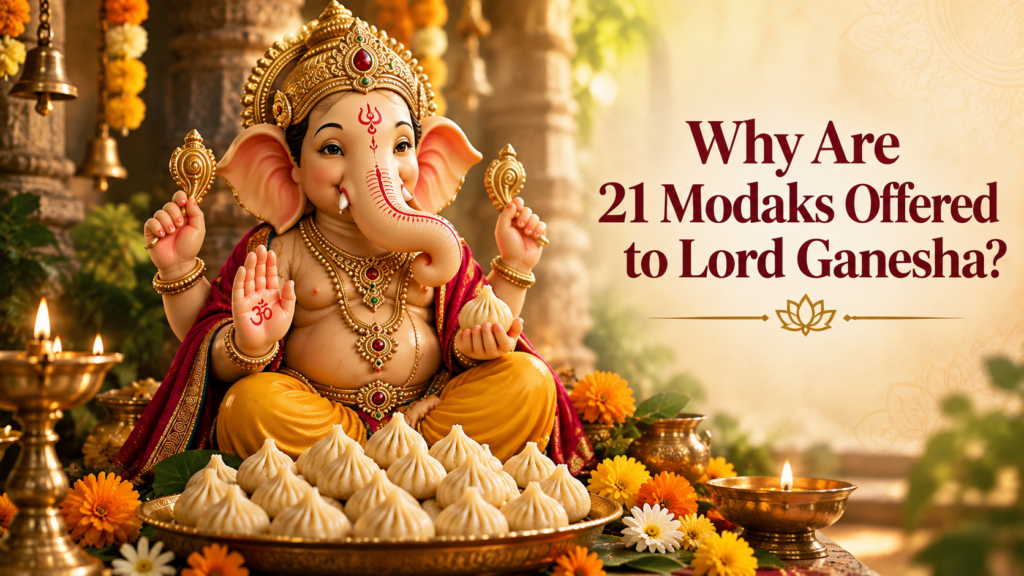
Modak is one of the most beloved offerings associated with Lord Ganesha. During Ganesh Chaturthi and other Ganesha celebrations, devotees often prepare or offer 21 modaks as naivedya to Ganpati Bappa.
But why exactly 21?
The number is not simply about quantity. In Hindu devotional traditions, 21 modaks are associated with completeness, devotion, and the offering of one’s whole being to Lord Ganesha. Different traditions and stories explain the significance of the number in different ways.
The Story Behind 21 Modaks
A popular traditional story explains the connection between Lord Ganesha and 21 modaks through a divine feast. According to one version of the story, Goddess Parvati prepared modaks and offered them to Lord Ganesha. After receiving the offering, Ganesha was pleased and blessed those who approached him with devotion.
In some retellings, the number 21 becomes significant because 21 modaks were prepared or offered as part of the divine occasion. It is important to note that stories surrounding the 21 modaks vary across regional and devotional traditions. The symbolism and details may differ, but the central theme remains the same: modak represents a loving offering to Lord Ganesha.
What Does the Modak Symbolize?
The modak has a special place in Ganesha worship. Its sweet filling is often understood as representing the sweetness of spiritual knowledge and the joy that comes from devotion. The outer covering and sweet interior can also be viewed symbolically. The simple outer form conceals a delicious filling within, reminding devotees that deeper wisdom may lie beyond outward appearances.
This is one reason the modak is traditionally associated with wisdom, spiritual knowledge, and divine blessings.
Why Is the Number 21 Considered Special?
The number 21 has symbolic importance in several Hindu practices, although its exact interpretation can differ depending on the tradition.
In the context of Ganesha worship, one widely shared interpretation breaks 21 into
- Five organs of perception
- Five organs of action
- Five vital energies or pranas
- Mind
- Intellect
Together, these represent different dimensions of human existence. Offering 21 modaks can therefore be understood as a symbolic act of complete surrender and devotion. Rather than simply offering 21 sweets, the devotee is reminded to dedicate one’s thoughts, actions, senses, energy, and understanding to Lord Ganesha.
What Is the Spiritual Meaning of Offering 21 Modaks?
At a deeper level, the offering represents more than food. The devotee can view the 21 modaks as an offering of the different dimensions of life to Lord Ganesha. The prayer is essentially one of surrender:
“May my thoughts, senses, actions, energy, and intellect be guided by wisdom and righteousness.”
This makes the tradition especially meaningful during Ganesh Chaturthi, when devotees seek Ganesha’s blessings for a fresh and auspicious beginning.
Modak and Lord Ganesha’s Love for Sweets
Lord Ganesha is popularly depicted with a modak in his hand, and the sweet has become one of his most recognizable offerings. The word modak is often associated with happiness and delight. In devotional understanding, its sweetness represents the joy and bliss associated with divine knowledge and spiritual realization.
That is why devotees lovingly offer modaks to Ganesha and later receive them as prasad.
Why Do Devotees Offer Modaks as Prasad?
After the modaks are offered to Lord Ganesha during worship, they are traditionally distributed among family members and devotees as prasad. Prasad is not viewed merely as food. It represents the grace and blessings of the deity and is received with gratitude and reverence. Sharing modaks also adds a beautiful communal dimension to Ganesh Chaturthi, bringing family members and devotees together in celebration.
The Deeper Lesson of 21 Modaks
The tradition of offering 21 modaks carries a simple but profound message. The sweetness of the modak reminds us of the sweetness of devotion, while the number 21 can remind us to dedicate the different aspects of our lives to a higher purpose. Lord Ganesha is worshipped as the remover of obstacles and the deity associated with wisdom and auspicious beginnings. Offering 21 modaks becomes, therefore, a prayer for wisdom, clarity, devotion, and an obstacle-free path.
Conclusion
The tradition is rooted in devotional customs, symbolic interpretations, and popular stories associated with Ganesha worship. One widely shared interpretation connects the 21 offerings with the senses, organs of action, vital energies, mind, and intellect—symbolizing the offering of one’s whole being to Ganesha. Whether prepared at home during Ganesh Chaturthi or offered at a temple, the 21 modaks ultimately represent love, devotion, surrender, and the sweetness of divine blessings.
For devotees, the most important part of the offering is not simply the number of modaks, but the faith and devotion with which they are offered to Ganpati Bappa.
