

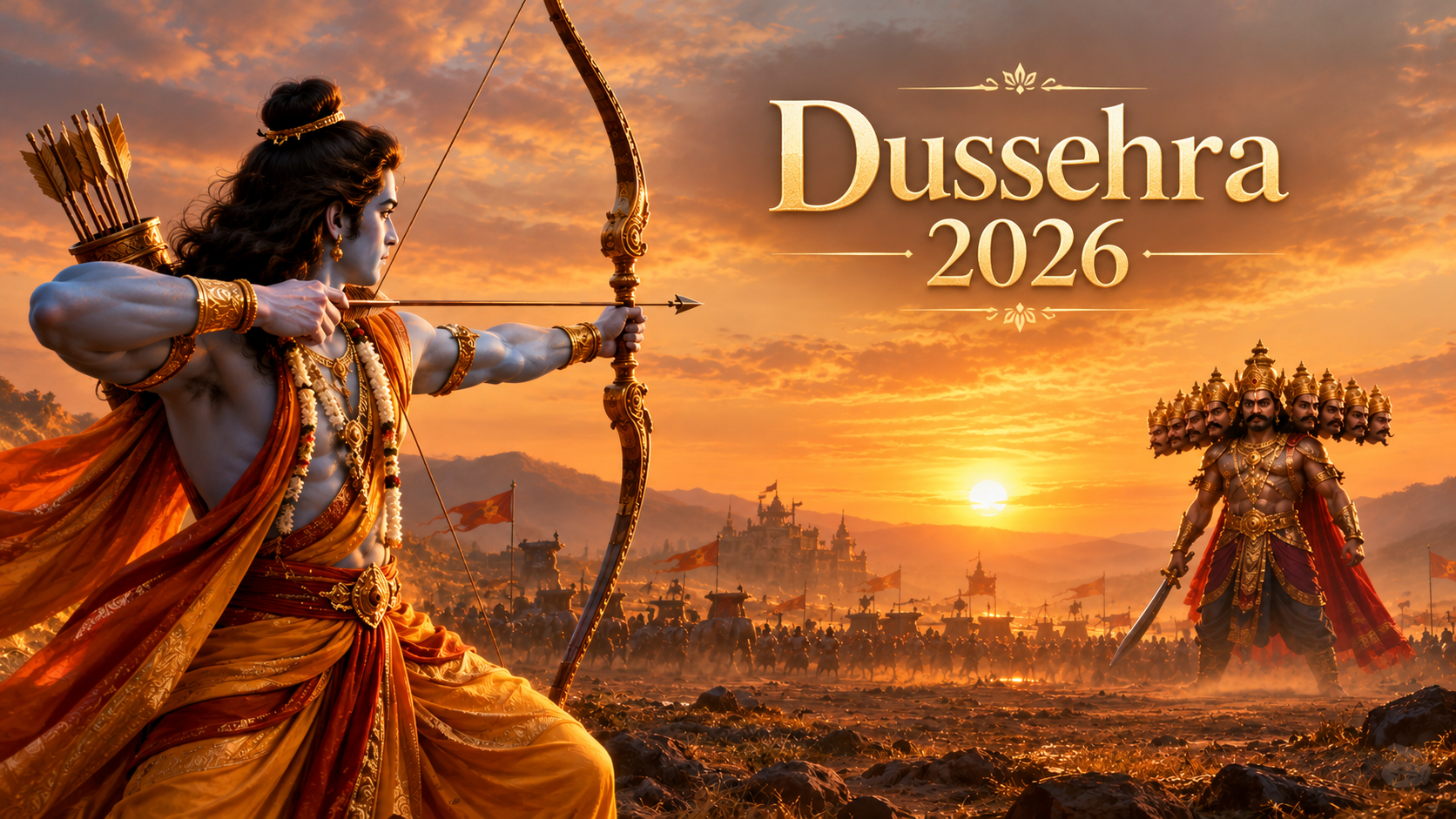
Dussehra is an important Hindu festival that celebrates the victory of good over evil, truth over falsehood, and righteousness over wrongdoing. Also known as Vijayadashami, the festival holds deep religious and spiritual significance for millions of Hindus.
Dussehra is traditionally associated with Lord Rama’s victory over Ravana, the king of Lanka, as described in the Hindu epic Ramayana. The festival reminds devotees of the importance of following dharma, controlling negative qualities, and choosing the path of truth and righteousness.
In 2026, Dussehra will be celebrated on Tuesday, October 20. On this auspicious occasion, devotees offer prayers, participate in religious ceremonies, and reflect on the timeless message that good ultimately triumphs over evil.
Dussehra 2026 Date and Day
Dussehra 2026 will be celebrated on Tuesday, October 20, 2026.
The festival falls on Ashwin Shukla Dashami, the tenth day of the bright fortnight of the Hindu lunar month of Ashwin. It follows the nine days of Navratri and is widely regarded as an auspicious occasion for worship, prayer, and new beginnings.
Why Is Dussehra Celebrated?
Dussehra is celebrated to commemorate the victory of Lord Rama over Ravana. The story comes from the Ramayana, one of the most revered Hindu epics. Ravana was the powerful king of Lanka, known for his intelligence, knowledge, strength, and devotion to Lord Shiva. However, his decision to abduct Goddess Sita, the wife of Lord Rama, led to a great conflict.
Lord Rama, accompanied by his brother Lakshmana, Lord Hanuman, and an army of devoted allies, travelled to Lanka to rescue Sita. A fierce battle followed between Rama’s forces and Ravana’s army. Ultimately, Lord Rama defeated Ravana, bringing an end to his wrongdoing and restoring righteousness.
This victory is commemorated on Dussehra as a reminder that arrogance, injustice, and the misuse of power cannot ultimately prevail over truth and dharma. The festival encourages devotees to remember Lord Rama’s virtues, including courage, compassion, self-discipline, integrity, and commitment to righteousness.
Religious and Spiritual Significance of Dussehra
Dussehra holds a special place in Hindu religious tradition because it represents the triumph of righteousness and the restoration of dharma.
- Victory of Good Over Evil
The central message of Dussehra is that good ultimately triumphs over evil. Lord Rama’s victory over Ravana represents the power of truth, justice, and righteousness. The festival inspires devotees to remain honest, act responsibly, and avoid wrongdoing even when faced with challenges.
- The Importance of Dharma
Dharma refers to righteousness, moral responsibility, and the right way of living. Lord Rama is revered as Maryada Purushottama, an ideal of virtuous conduct and self-discipline. Dussehra encourages people to fulfil their responsibilities, respect others, and make decisions guided by moral principles.
- The Destruction of Ego and Arrogance
Ravana’s story is a powerful reminder that pride and arrogance can lead to downfall. Despite his knowledge and strength, he failed to control his ego and correct his wrongdoing. The festival encourages devotees to practise humility, acknowledge their mistakes, and treat others with dignity.
- Courage in the Face of Adversity
Lord Rama’s journey demonstrates the importance of courage, perseverance, and faith when facing difficult circumstances. Dussehra reminds devotees not to abandon what is right simply because the path is challenging.
- Hope and New Beginnings
Dussehra is also considered an auspicious time to move forward with confidence, leave behind harmful habits, and begin new endeavours with positive intentions. Its message encourages personal improvement and renewed commitment to truth, discipline, and compassion.
Dussehra 2026 Puja Vidhi: How to Perform Puja at Home
Devotees can perform a simple Dussehra puja at home to seek the blessings of Lord Rama and pray for peace, wisdom, prosperity, and the strength to follow dharma.
The precise rituals may differ according to family traditions. The following is a simple worship procedure suitable for a home puja.
Dussehra Puja Samagri
Prepare the following items before beginning the puja:
- A clean wooden platform or puja space
- An image or idol of Lord Rama
- Flowers and garlands
- Kumkum and sandalwood paste
- Akshata, or unbroken rice grains
- A diya with ghee or oil
- Cotton wicks
- Incense sticks, if used in your tradition
- Fruits and sweets for bhog
- A small vessel of clean water
- A bell, if available
Step 1: Clean the Puja Area
Clean the place where you intend to perform the puja. Arrange the image or idol of Lord Rama on a clean platform and prepare the offerings. A peaceful and clean environment helps devotees concentrate on prayer.
Step 2: Take a Bath and Wear Clean Clothes
Take a bath and wear clean clothes before beginning the puja. Sit comfortably before the deity and calm your mind. You may silently resolve to follow truth, practise self-discipline, and avoid harmful actions.
Step 3: Light the Diya
Light a diya before Lord Rama. If customary, light incense and offer flowers, kumkum, sandalwood paste, and akshata. Pray for the well-being of your family and ask for the wisdom and courage to make righteous decisions.
Step 4: Worship Lord Rama
Offer flowers to Lord Rama and recite a prayer, mantra, or devotional hymn. Devotees may chant “Shri Ram Jai Ram Jai Jai Ram” or recite verses from the Ramayana according to their personal practice. You may also pray to Goddess Sita, Lakshmana, and Lord Hanuman.
Step 5: Offer Bhog
Offer fruits, sweets, or other suitable food to the deity. Pray with gratitude and devotion before distributing the prasad among family members.
Step 6: Perform Aarti
Perform aarti for Lord Rama using a lit diya and sing a traditional Ram aarti if familiar. Conclude the prayer by asking for peace, happiness, good health, and the strength to overcome negative thoughts and actions.
Step 7: Reflect on the Meaning of Dussehra
After the puja, take a few moments to reflect on the message of Lord Rama’s victory.
Consider which negative habits you wish to overcome and which positive qualities you want to cultivate. This personal reflection helps bring the spiritual message of Dussehra into everyday life.
What Is Ravana Dahan?
Ravana Dahan is the traditional burning of an effigy of Ravana on Dussehra. It commemorates Lord Rama’s victory over Ravana and symbolizes the destruction of evil and adharma.
In many Dussehra celebrations, effigies of Ravana, his brother Kumbhakarna, and his son Meghnad are burned. The ceremony represents the end of Ravana’s wrongdoing and the restoration of righteousness. It also provides an opportunity for people to reflect on their own behaviour.
Ravana Dahan is not simply a symbolic act of defeating an enemy. Its deeper message is that people must work to overcome the negative qualities within themselves, including ego, anger, greed, jealousy, dishonesty, and arrogance.
The ritual reminds devotees that real victory involves choosing goodness and correcting one’s own mistakes.
Why Is Ravana Considered a Symbol of Evil?
Ravana is portrayed in the Ramayana as a complex figure who possessed considerable knowledge, strength, and devotion. His story is therefore often understood as a warning about the consequences of uncontrolled pride and the misuse of power.
His downfall was not caused by a lack of intelligence or ability. Rather, it resulted from his decisions and refusal to act according to dharma.
Ravana’s story teaches several important lessons:
- Knowledge requires wisdom. Learning and intelligence must be guided by sound judgement and ethical conduct.
- Power requires responsibility. Strength and authority should be used to protect others, not to harm or control them.
- Pride can cloud judgement. Excessive ego can prevent a person from recognizing mistakes and accepting advice.
- Wrongdoing has consequences. Personal ability or social status does not place anyone above moral responsibility.
These lessons make Ravana’s defeat an enduring part of the spiritual message of Dussehra.
The Symbolic Meaning of Ravana’s Ten Heads
Ravana is traditionally depicted with ten heads. These heads are commonly interpreted in devotional and popular explanations as symbols of multiple human weaknesses and the dangers of uncontrolled desires.
Some interpretations associate them with ego, anger, greed, attachment, jealousy, pride, and other negative tendencies. However, there is no single universally accepted list assigning one specific weakness to each head.
The broader symbolic lesson is that human beings must learn to control harmful impulses rather than allow them to dominate their decisions.
Dussehra invites devotees to consider the qualities they need to overcome and to cultivate patience, humility, honesty, compassion, and self-control.
Conclusion
Dussehra 2026 will be celebrated on October 20, marking an important occasion to remember Lord Rama’s victory over Ravana and the timeless triumph of good over evil.
The festival teaches that righteousness, courage, humility, and self-discipline are essential for a meaningful life. Ravana’s defeat reminds us that intelligence and power cannot compensate for arrogance or wrongdoing, while Lord Rama’s example inspires us to remain committed to truth and dharma.
As we celebrate Dussehra, let us make a sincere effort to overcome our negative qualities, treat others with compassion, and choose the path of righteousness in our everyday lives.
May Lord Rama bless everyone with wisdom, strength, peace, happiness, and prosperity.
Wishing you and your family a blessed and joyful Dussehra 2026
