

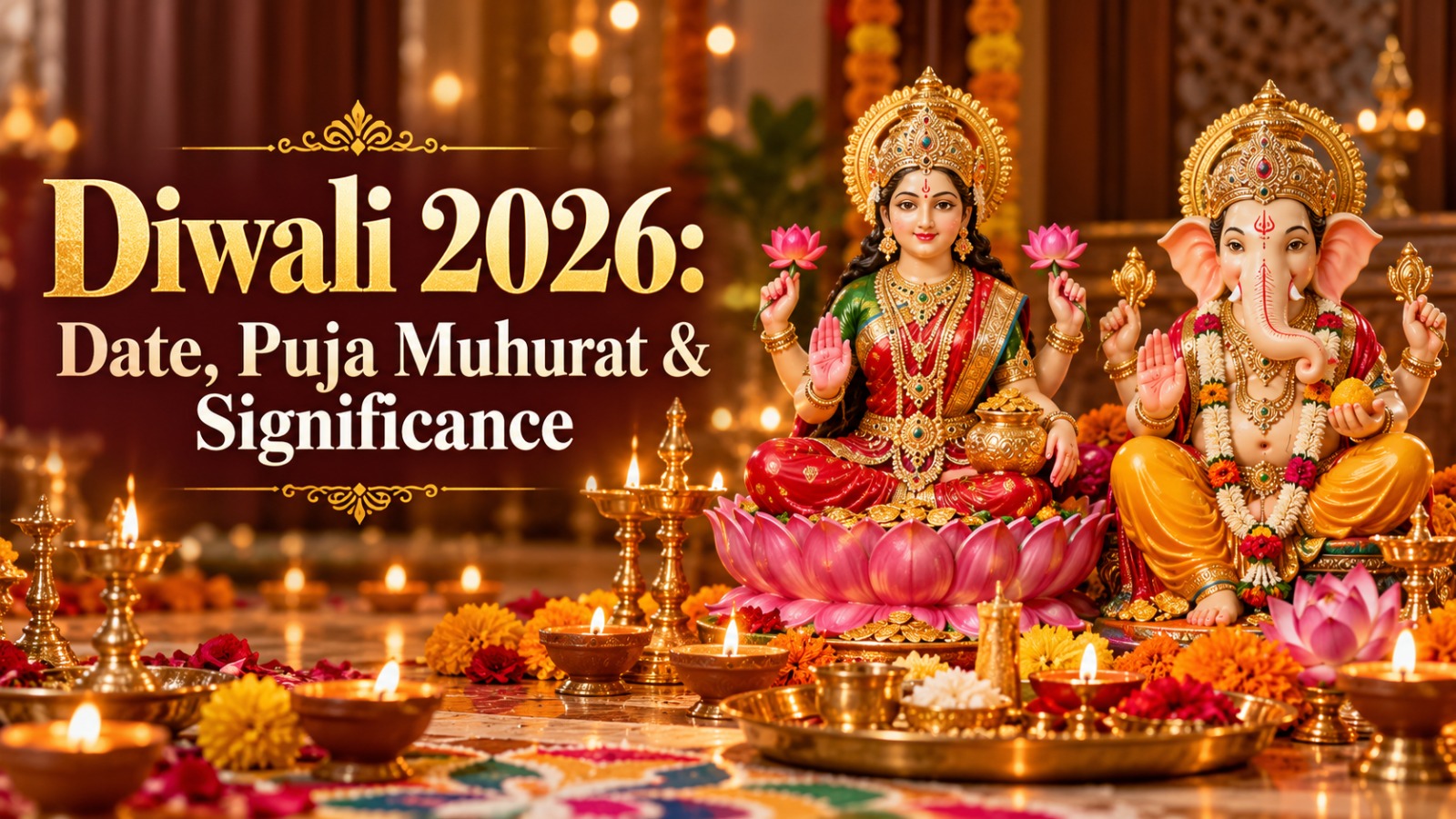
Diwali, also known as Deepavali, is one of the most cherished Hindu festivals, celebrated with glowing diyas, colorful rangoli, prayers, sweets, and family gatherings. The festival symbolizes the victory of light over darkness, knowledge over ignorance, and good over evil. For devotees, Diwali is also an important occasion to worship Goddess Lakshmi, the deity associated with prosperity, abundance, and well-being, along with Lord Ganesha.
If you are planning your celebrations, here is everything you need to know about Diwali 2026, including its date, Lakshmi Puja traditions, spiritual significance, and the rituals commonly followed during this auspicious festival.
When Is Diwali in 2026?
Diwali 2026 will be celebrated on Sunday, November 8, 2026, according to the commonly followed Hindu festival calendar.
Diwali is observed on Amavasya, the new moon day of the Hindu month of Kartik. The festival’s date is determined by the traditional lunar calendar, so the corresponding Gregorian date changes each year.
Although Diwali is celebrated across India and in Hindu communities worldwide, customs can differ by region. Some traditions emphasize the return of Lord Shri Rama to Ayodhya, while others place particular importance on Goddess Lakshmi, Lord Ganesha, or the worship of Goddess Kali.
Diwali 2026 Lakshmi Puja Muhurat
Lakshmi Puja is one of the central rituals of Diwali. Devotees worship Goddess Lakshmi and Lord Ganesha, seeking blessings for peace, wisdom, prosperity, and happiness in the coming year.
The Lakshmi Puja muhurat for Diwali 2026 depends on the local city and the applicable Panchang calculations. The auspicious period is traditionally selected with reference to the Amavasya tithi and the evening Pradosh period. The exact timings should be checked using a reliable local Hindu calendar before performing the puja.
During Lakshmi Puja, families typically clean and decorate their homes, arrange the idols or images of the deities, prepare offerings, light oil lamps, and recite prayers and aartis. Many devotees worship Lord Ganesha first, seeking wisdom and the removal of obstacles, before offering prayers to Goddess Lakshmi.
For the most accurate muhurat, check the timings published for your city rather than following a time calculated for another location.
The Five Days of Diwali
Diwali is commonly associated with a five-day festive period. Each day has its own religious significance and traditions.
- Dhanteras
Dhanteras marks the beginning of the main Diwali festivities for many families. Devotees worship Goddess Lakshmi and Lord Dhanvantari, who is associated with health and Ayurveda. Buying utensils, gold, silver, or other meaningful household items is a popular custom in many communities.
- Naraka Chaturdashi or Chhoti Diwali
Naraka Chaturdashi, also known as Chhoti Diwali in several regions, is associated with the defeat of the demon Narakasura by Lord Krishna. The occasion symbolizes the triumph of good over evil. Traditional observances may include an early morning bath, lighting lamps, and preparing for the main festival.
- Lakshmi Puja and Diwali
The main Diwali celebration centers on prayers, lamps, decorations, and family gatherings. Devotees worship Goddess Lakshmi and Lord Ganesha, decorate entrances with rangoli, exchange sweets and gifts, and illuminate their homes with diyas.
- Govardhan Puja
Govardhan Puja commemorates Lord Krishna’s protection of the people of Vrindavan by lifting Govardhan Hill. Devotees prepare food offerings, often associated with the Annakut tradition, and express gratitude for nature and the nourishment it provides.
- Bhai Dooj
Bhai Dooj celebrates the bond between brothers and sisters. Sisters traditionally perform a tilak ceremony and pray for their brothers’ well-being, while families exchange gifts and share festive meals. Customs vary across regions.
The exact observance dates of these festivals should be confirmed with a regional Panchang, as lunar tithis and local traditions can affect the calendar.
Diwali Puja Rituals and Traditions
Preparing the home is an important part of Diwali. Families clean their surroundings, decorate doorways with rangoli, and place diyas near entrances, windows, and prayer spaces. These preparations express the desire to welcome auspiciousness, happiness, and prosperity.
For Lakshmi Puja, devotees generally arrange an altar with images or idols of Goddess Lakshmi and Lord Ganesha. Common offerings include flowers, kumkum, rice, sweets, fruits, and a diya. The specific items used may differ according to family customs and regional practices.
The puja often begins with prayers to Lord Ganesha, followed by worship of Goddess Lakshmi. Devotees may recite Lakshmi mantras, chant devotional prayers, and perform Lakshmi Ji Ki Aarti and Ganesh Aarti. After the prayers, prasad is distributed among family members.
Lighting earthen lamps is among the most recognizable Diwali traditions. The warm glow of diyas represents hope, purity, and the dispelling of darkness. Many families also visit relatives, share sweets, offer charity, and seek blessings from elders.
Why Is Diwali Celebrated? Religious and Spiritual Significance
One of the best-known stories associated with Diwali is the return of Lord Shri Rama to Ayodhya after defeating Ravana and completing his fourteen-year exile. According to the traditional Ramayana narrative, the people of Ayodhya welcomed Rama, Sita, and Lakshmana by illuminating the city with rows of lamps. This story connects Diwali with righteousness, devotion, and the victory of good over evil.
Goddess Lakshmi’s worship adds another important dimension to the festival. Devotees pray for prosperity, but the deeper significance of the occasion also includes gratitude, generosity, and responsible use of wealth. Worshipping Lord Ganesha alongside Lakshmi represents the importance of wisdom and discernment in life’s endeavors.
At a spiritual level, Diwali encourages people to overcome negativity, cultivate compassion, strengthen family bonds, and bring greater clarity into their lives. Lighting a diya can serve as a reminder that even a small act of goodness can bring light to the world around us.
How to Celebrate Diwali Meaningfully
You can celebrate Diwali by keeping your home clean, lighting traditional diyas safely, performing prayers according to your family customs, and sharing festive meals with loved ones. Consider donating food or essential supplies to people in need and choosing environmentally responsible decorations.
If you use decorative lights or candles, keep them away from curtains and other flammable materials. Choosing quieter celebrations and limiting firecracker use can also help protect children, older adults, animals, and the environment.
Conclusion
Diwali 2026, falling on Sunday, November 8, is an opportunity to celebrate faith, hope, gratitude, and new beginnings. From Lakshmi Puja and the lighting of diyas to the stories of Lord Rama and the worship of Lord Ganesha, the festival brings together rich spiritual traditions and joyful family customs.
As you prepare for Diwali, check the Lakshmi Puja muhurat for your city, follow your family’s traditional rituals, and remember the festival’s enduring message: let wisdom overcome ignorance, goodness overcome negativity, and light guide the way forward.
May Goddess Lakshmi and Lord Ganesha bless you and your family with peace, prosperity, wisdom, and happiness. Shubh Deepavali!
