

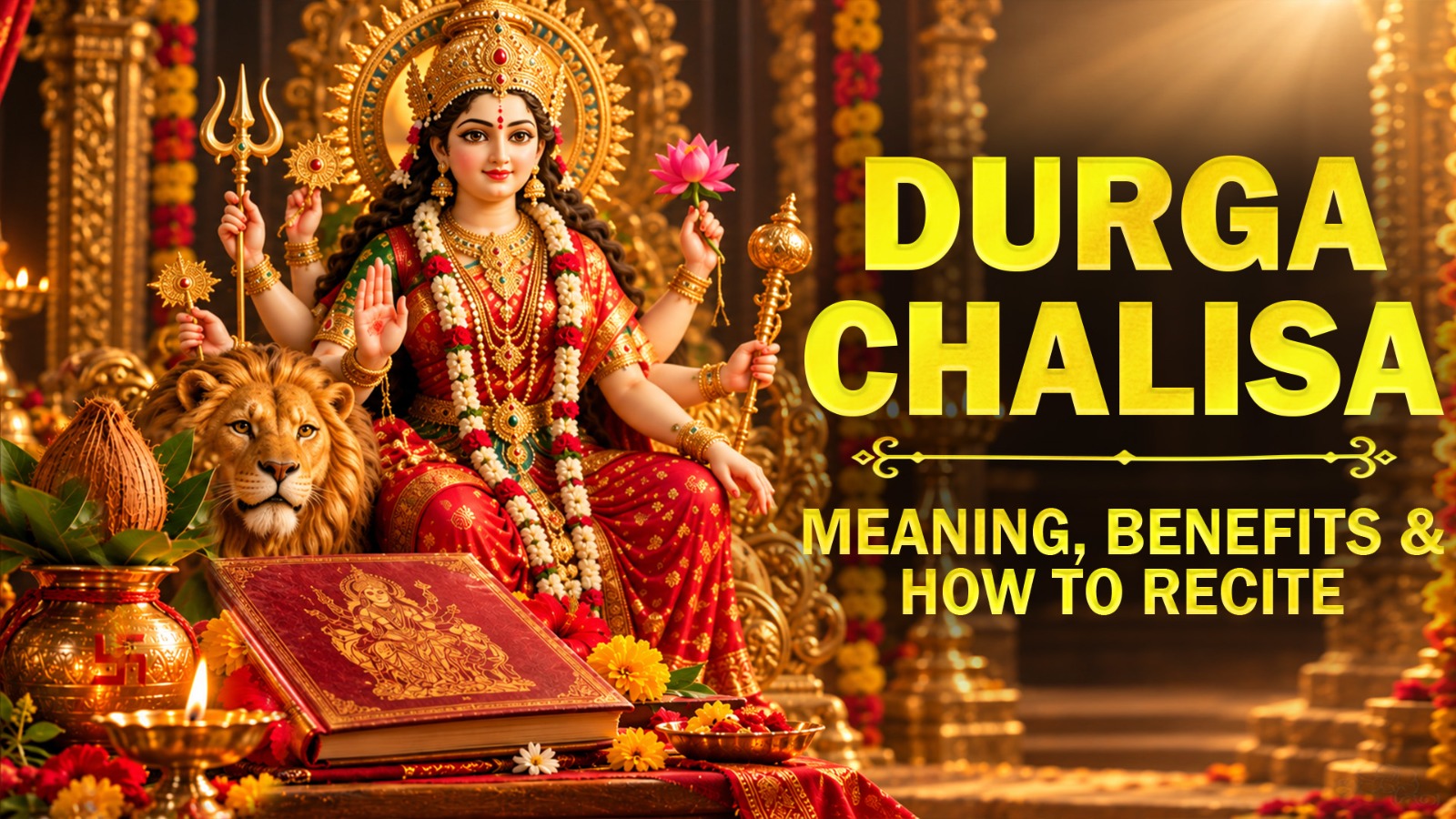
Durga Chalisa is a devotional prayer dedicated to Maa Durga, the divine embodiment of Shakti, courage, protection and compassion. The word Chalisa refers to a devotional composition traditionally consisting of forty verses.
Devotees recite Durga Chalisa to remember the divine qualities of Maa Durga, express their devotion and seek her blessings for strength, peace and protection. It is especially popular during Navratri, Durga Puja and other occasions dedicated to the Goddess. In this article, we explore the meaning and significance of Durga Chalisa, its traditional spiritual benefits, and how to recite it properly.
What is Durga Chalisa?
Durga Chalisa is a forty-verse devotional prayer that praises the glory, power and compassionate nature of Maa Durga. The Chalisa describes Maa Durga as the divine mother who protects her devotees, removes fear and destroys negative forces. It also reflects the different qualities associated with the Goddess, including strength, wisdom, compassion and divine power.
The prayer is commonly recited during Navratri, Durga Puja, Fridays and daily worship.
Meaning and Significance of Durga Chalisa
The central message of Durga Chalisa is devotion and surrender to Maa Durga. The verses praise her divine form and remind devotees of her role as the protector of righteousness.
Maa Durga as the Divine Mother
Maa Durga is worshipped as the universal mother who cares for and protects her devotees. Her compassionate nature represents divine love, shelter and guidance. Reciting her praises is a way for devotees to express their faith and seek the Mother’s blessings.
Symbol of Strength and Courage
Durga represents Shakti, or divine feminine power. Her form reminds devotees that strength and courage are necessary to face challenges and overcome difficulties. The lion associated with Maa Durga is also traditionally seen as a symbol of courage and power.
Victory Over Evil
The stories associated with Maa Durga describe her victories over powerful forces of evil. These stories represent the eternal victory of dharma over adharma and good over evil. The Durga Chalisa therefore serves not only as a prayer but also as a reminder to remain courageous and committed to righteousness.
Protection and Divine Grace
Maa Durga is traditionally regarded as a powerful protector. Devotees turn to her in times of difficulty and uncertainty, placing their faith in her divine grace. The prayer encourages surrender, faith and the belief that one can face difficulties with greater courage.
Benefits of Reading Durga Chalisa
Devotees traditionally associate Durga Chalisa recitation with several spiritual and devotional benefits. These should be understood as traditional beliefs and experiences of devotees, rather than guaranteed material or medical outcomes.
- Encourages Inner Strength
Remembering Maa Durga’s strength can inspire devotees to develop courage and determination when facing challenges in life. Regular prayer can serve as a reminder that difficult situations can be approached with patience and faith.
- Helps Calm the Mind
Reciting a familiar devotional prayer slowly and attentively can create a peaceful atmosphere and help the mind become more focused. For many devotees, prayer becomes a quiet period for reflection and inner calm.
- Helps Overcome Fear
Maa Durga is traditionally worshipped as a protector who removes fear and negativity. Reciting the Chalisa with devotion can help devotees cultivate courage and a stronger sense of faith when dealing with uncertainty.
- Strengthens Devotion to Maa Durga
Regular recitation creates an opportunity to remember Maa Durga and develop a deeper devotional connection with her. Over time, it can become a meaningful part of one’s daily spiritual routine.
- Encourages Positive Thinking
The themes of courage, righteousness, protection and divine strength found in Durga worship can encourage devotees to approach life’s difficulties with a more positive and resilient mindset.
- Supports Spiritual Discipline
Maintaining a regular prayer practice requires consistency and concentration. Reciting Durga Chalisa regularly can therefore become a simple way to develop spiritual discipline.
- Seeking Divine Protection and Blessings
Devotees traditionally recite Durga Chalisa while seeking Maa Durga’s protection, guidance and blessings for themselves and their families. The prayer is ultimately an expression of faith and surrender to the Divine Mother.
Why Read Durga Chalisa During Navratri?
Navratri is one of the most important periods for worshipping Maa Durga. During these nine days, devotees honour the different forms of the Goddess and engage in prayer, fasting and other spiritual practices. Durga Chalisa can be included as part of the daily Navratri puja.
Devotees may recite it after their regular worship or alongside other devotional texts such as Devi Kavach, Argala Stotram, Durga Saptashati or Siddha Kunjika Stotram, depending on their family tradition. The prayer can make the daily worship routine more focused on devotion to Maa Durga and her divine qualities.
How to Recite Durga Chalisa?
Durga Chalisa can be recited at home without an elaborate ritual. A simple and sincere approach is sufficient.
Step 1: Prepare Yourself
Take a bath and wear clean clothes if possible. Try to keep your mind calm before beginning the prayer.
Step 2: Prepare the Puja Space
Clean the area where you will pray and place an image or idol of Maa Durga. You may light a diya and offer flowers, kumkum, fruits or other traditional offerings.
Step 3: Begin with Prayer
Sit comfortably before Maa Durga and take a moment to remember the Goddess with devotion. You may begin with a simple prayer asking for her blessings and guidance.
Step 4: Recite The Durga Chalisa
Recite the Chalisa slowly and clearly. Try to understand the meaning of the verses rather than simply completing the prayer quickly.
Step 5: Offer Your Prayer
After completing the Chalisa, sit quietly for a moment and offer your personal prayers to Maa Durga. You may seek strength, wisdom, peace and guidance for yourself and your family.
Conclusion
Durga Chalisa is more than a devotional prayer—it is a way for devotees to remember the strength, compassion and protective power of Maa Durga.
Its verses encourage faith, courage and surrender while reminding devotees of the victory of righteousness over evil. Whether recited during Navratri or as part of daily worship, the Chalisa can become a meaningful practice of devotion and spiritual reflection.
With sincerity and faith, devotees turn to Maa Durga for strength, guidance, peace and divine blessings.
Jai Mata Di!
