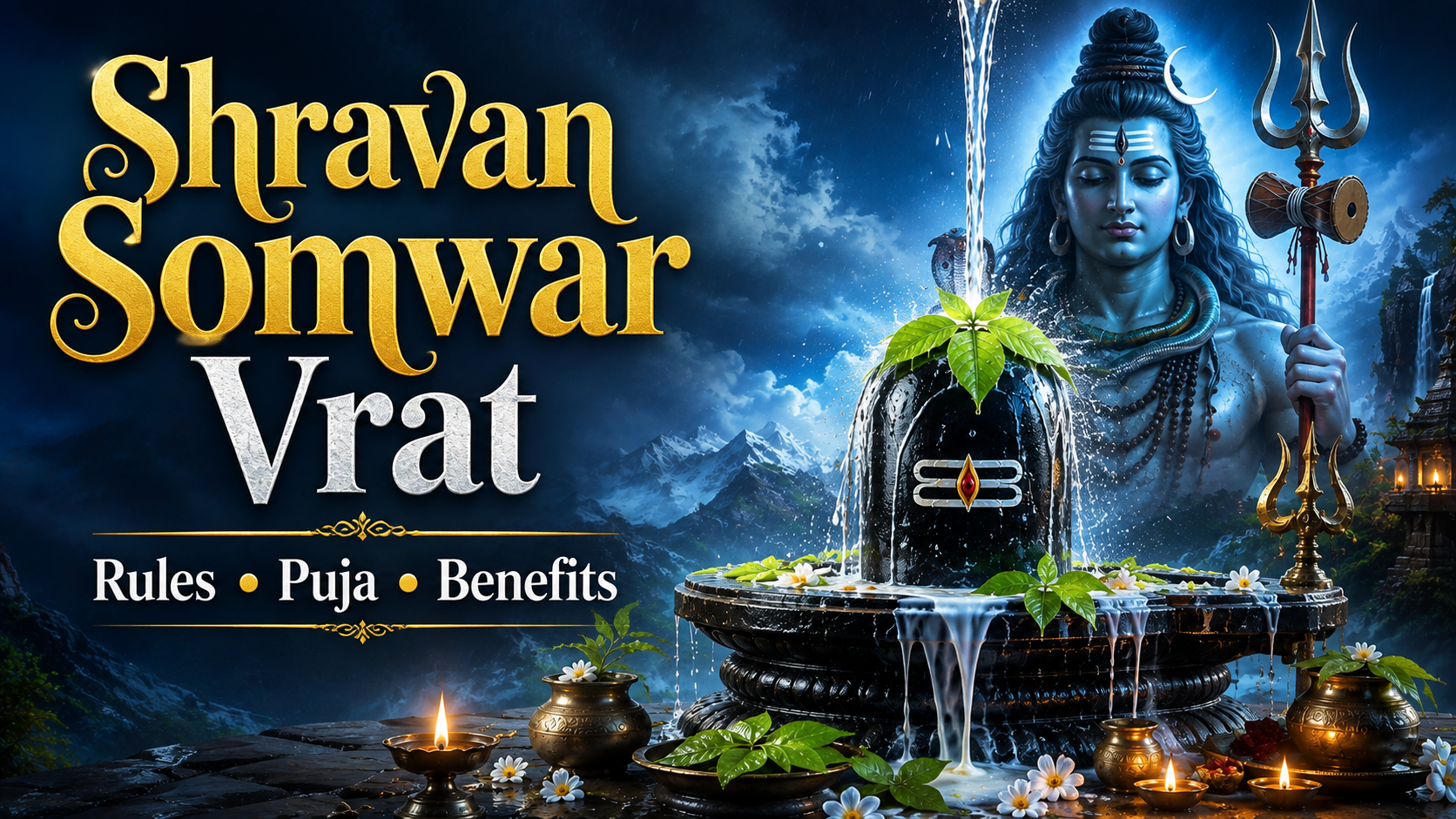
Shravan Somwar Vrat is one of the most sacred fasts observed by devotees of Lord Shiva during the holy month of Shravan (Sawan). Every Monday in this auspicious month is dedicated to Mahadev, and millions of devotees across India observe this vrat with deep devotion, prayers, and fasting.
It is believed that worshipping Lord Shiva on Shravan Mondays helps remove obstacles, grants peace, fulfills sincere wishes, strengthens relationships, and brings spiritual growth. According to Hindu tradition, Goddess Parvati herself observed intense penance and fasting to attain Lord Shiva as her husband, making this vrat especially significant for unmarried women seeking a suitable life partner. At the same time, married couples, families, and devotees of all ages also observe this vrat for health, prosperity, harmony, and divine blessings.
In this guide, you’ll learn the complete fasting rules, step-by-step puja vidhi, required puja samagri, benefits of observing Shravan Somwar Vrat, and common mistakes to avoid.
Why Is Shravan Somwar So Special?
The month of Shravan is considered extremely dear to Lord Shiva. Several Hindu scriptures associate this month with important events connected to Mahadev.
One of the most well-known stories comes from the Samudra Manthan (Churning of the Ocean). During the churning, the deadly poison Halahala emerged, threatening all creation. Lord Shiva compassionately consumed the poison to protect the universe. Goddess Parvati held His throat to prevent the poison from spreading throughout His body, causing His throat to turn blue and earning Him the name Neelkanth.
Devotees offer water, milk, and sacred items during Shravan as symbols of devotion, gratitude, and reverence toward Lord Shiva.
Mondays are already considered sacred to Shiva, and when they fall during Shravan, their spiritual significance becomes even greater.
Who Can Observe Shravan Somwar Vrat?
Shravan Somwar Vrat may be observed by:
- Men and women
- Married couples
- Unmarried girls seeking a suitable life partner
- Students seeking wisdom and concentration
- Working professionals praying for success
- Families seeking peace and prosperity
- Senior citizens who are physically able to fast
People with medical conditions, pregnant women, elderly individuals, or those taking medication should consult a healthcare professional before undertaking a strict fast. Devotion and sincere prayer are considered more important than physical austerity.
This divine intervention ensured that the cosmic process could proceed.
Shravan Somwar Vrat Rules
Although customs may vary by region and family tradition, the following guidelines are commonly observed.
1. Wake Up Early
Begin the day during Brahma Muhurta if possible. Take a bath and wear clean, preferably white or light-colored clothes.
2. Take a Sankalp
Before beginning the vrat, make a sincere resolve (Sankalp) before Lord Shiva, praying for purity, devotion, and the fulfillment of righteous wishes.
3. Observe the Fast
Different devotees follow different types of fasting:
- Nirjala Vrat (without food and water)
- Water-only fast
- Fruits and milk (Phalahar)
- One sattvic meal after sunset or after the evening puja
Choose the method that is appropriate for your health and personal circumstances.
4. Maintain Purity
Throughout the day:
- Speak truthfully.
- Avoid anger and arguments.
- Maintain positive thoughts.
- Practice self-discipline.
- Spend time in prayer or meditation.
5. Avoid Tamasic Foods
During the vrat, devotees generally avoid:
- Onion
- Garlic
- Meat
- Fish
- Eggs
- Alcohol
- Tobacco
Many also avoid regular grains depending on family traditions.
Shravan Somwar Puja Samagri
Prepare the following items before beginning the puja:
- Shivling or Lord Shiva idol/image
- Clean water
- Ganga Jal (if available)
- Milk
- Curd
- Honey
- Ghee
- Sugar
- Bilva (Bel) leaves
- White flowers
- Dhatura (where traditionally offered)
- Bhasma or Vibhuti
- Sandalwood paste
- Akshat (unbroken rice)
- Incense sticks
- Camphor
- Cotton wicks
- Ghee lamp
- Fruits
- Coconut
- Betel leaves and nuts
- Prasad (such as fruits or sweets)
Step-by-Step Shravan Somwar Puja Vidhi
Step 1: Clean the Puja Area
Clean the altar and place the Shivling or image of Lord Shiva on a clean platform.
Step 2: Offer Water
Begin the Abhishek by offering clean water followed by Ganga Jal.
Step 3: Perform Panchamrit Abhishek
Offer:
- Milk
- Curd
- Honey
- Ghee
- Sugar
Finally, rinse the Shivling again with clean water.
Step 4: Decorate the Shivling
Offer:
- Bilva leaves
- White flowers
- Sandalwood paste
- Bhasma
- Akshat
Ensure the Bilva leaves are clean and traditionally offered with the smooth side facing upward.
Step 5: Chant Shiva Mantras
Popular mantras include:
- Om Namah Shivaya
- Mahamrityunjaya Mantra
- Shiva Ashtakam
- Rudrashtakam
- Shiva Chalisa
Chant according to your capacity with devotion.
Step 6: Perform Aarti
Light the lamp and incense before performing Shiva Aarti.
Step 7: Offer Naivedya
Offer fruits or sweets as prasad and conclude with heartfelt prayers.
Foods Allowed During Shravan Somwar Vrat
Depending on family traditions, devotees commonly consume:
- Fruits
- Milk
- Curd
- Buttermilk
- Coconut water
- Makhana
- Peanuts
- Sabudana
- Singhara flour
- Kuttu flour
- Rock salt (Sendha Namak)
Always follow the customs practiced in your household or community.
Benefits of Observing Shravan Somwar Vrat
1. Divine Blessings of Lord Shiva
The vrat is believed to invite Lord Shiva’s grace and protection.
2. Peace of Mind
Prayer, meditation, and fasting help cultivate inner calm and spiritual focus.
3. Removal of Obstacles
Devotees believe sincere worship helps overcome difficulties in life and brings positive opportunities.
4. Marital Harmony
Many married couples observe this vrat for happiness, understanding, and stability in their relationship.
5. Suitable Life Partner
According to tradition, unmarried women observe Shravan Somwar Vrat seeking Lord Shiva’s blessings for a virtuous and compatible spouse.
6. Spiritual Growth
The vrat encourages self-control, discipline, compassion, and devotion, helping devotees progress spiritually.
7. Positive Lifestyle
Fasting can inspire healthier eating habits, mindfulness, and gratitude while strengthening one’s connection with faith.
Common Mistakes to Avoid
While observing the vrat, try to avoid:
- Performing the puja in haste
- Offering damaged or dry Bilva leaves
- Breaking the fast carelessly with heavy food
- Losing patience or becoming angry
- Consuming prohibited foods knowingly
- Treating the vrat as a mere ritual without devotion
- Wasting food or prasad
Remember that sincerity and humility are central to the observance.
Conclusion
Shravan Somwar Vrat is more than a ritual of fasting—it is an opportunity to deepen one’s devotion, cultivate discipline, and seek the blessings of Lord Shiva through sincere worship. Whether you observe a complete fast or simply dedicate time to prayer and meditation, what matters most is the purity of your intention and faith.
May Lord Shiva bless you with peace, wisdom, strength, good health, prosperity, and spiritual progress.
Har Har Mahadev!
