

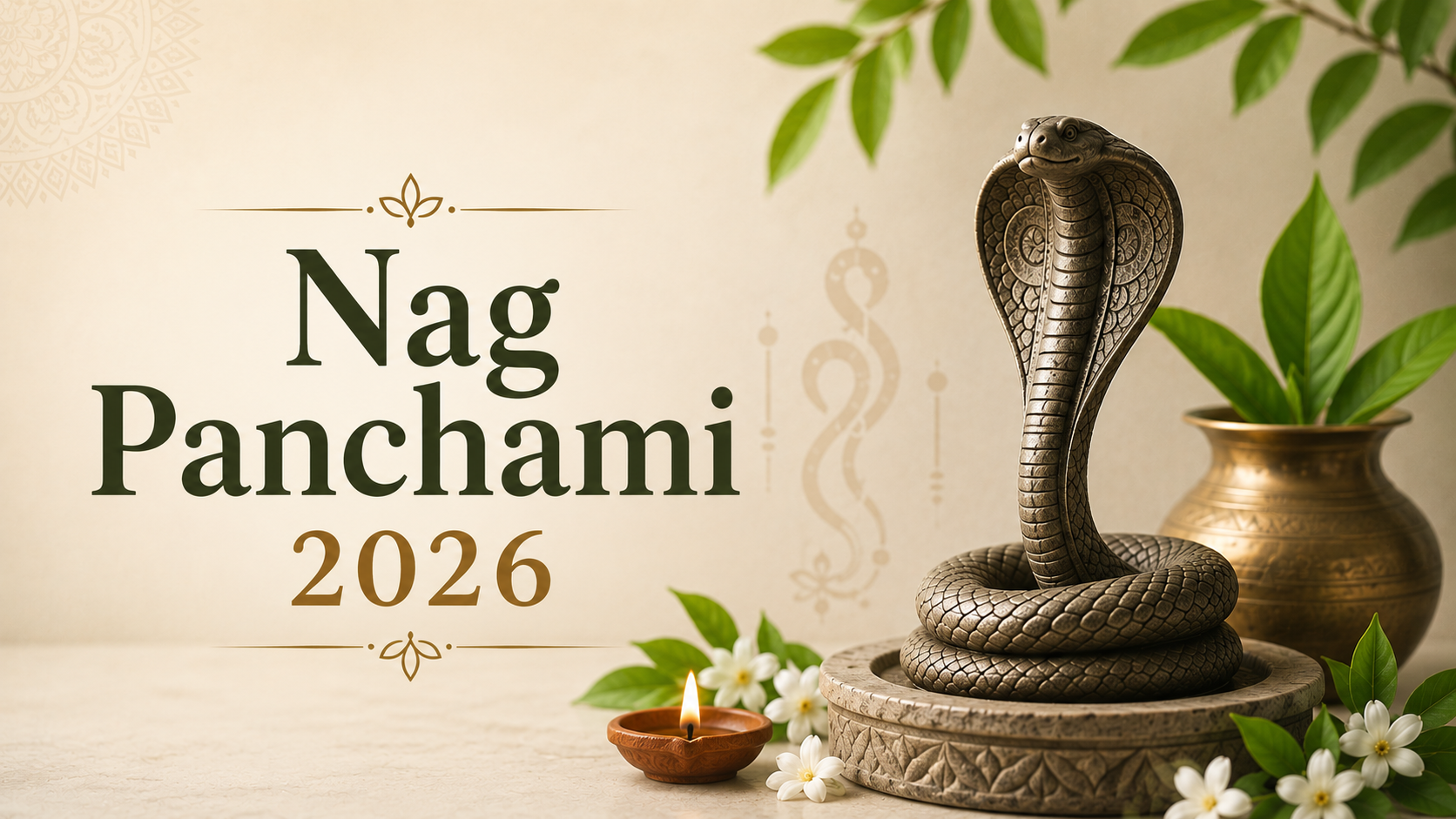
Nag Panchami 2026 will be celebrated on Monday, 17 August 2026. It is an important Hindu festival dedicated to the worship of Nag Devta (serpent deities). The festival is observed on the Panchami Tithi of the Shukla Paksha during the month of Shravan.
Nag Panchami holds a special place in Hindu tradition and is associated with Lord Shiva, Lord Vishnu, and several important stories from Hindu mythology. The festival also represents respect for nature and the importance of living in harmony with all forms of life.
When is Nag Panchami 2026?
In 2026, Nag Panchami will be observed on Monday, 17 August 2026. The festival falls during the auspicious month of Shravan, which is especially significant for devotees of Lord Shiva. Devotees worship Nag Devta, offer prayers, and seek blessings for protection, peace, prosperity, and the well-being of their families.
The exact Nag Panchami Puja Muhurat may vary depending on the location and the Panchang followed. Devotees can check their local Panchang for the precise Panchami Tithi and puja timings.
Why is Nag Panchami Celebrated?
Nag Panchami is celebrated to honour Nag Devta and the sacred serpents mentioned in Hindu scriptures. Snakes have a significant place in Hindu mythology and are closely associated with several deities. Lord Shiva is traditionally depicted with a serpent around his neck, while Lord Vishnu rests upon the divine serpent Shesha or Ananta. Serpents are therefore regarded as sacred and powerful beings in Hindu tradition.
The festival also has a connection with the monsoon season. During the rainy season, snakes and other creatures may leave their underground habitats because of flooding and water accumulation. Nag Panchami serves as a reminder to respect these creatures and maintain harmony with nature.
Nag Panchami Story
One of the most popular stories associated with Nag Panchami is the story of Lord Krishna and Kaliya Nag. According to Hindu mythology, the poisonous serpent Kaliya lived in the Yamuna River. His venom had polluted the river, making the water dangerous for the people and animals of the region.
When Krishna learned about the danger, he entered the Yamuna and confronted Kaliya. After defeating the serpent, Krishna instructed him to leave the river and return to another place where he would no longer harm the people or animals. Kaliya accepted Krishna’s command and left the Yamuna. The story is often understood as a representation of the victory of divine power over evil and the restoration of balance between nature and life.
Another important aspect of Nag Panchami is the worship of the Naga deities, including Ananta, Vasuki, Shesha, Padma and other serpents mentioned in Hindu scriptures.
Nag Panchami Puja Rituals
On Nag Panchami, devotees traditionally wake up early, take a bath, clean their homes and prepare for the puja. A picture, idol, or symbolic representation of Nag Devta may be placed in the puja area and worshipped with devotion. Common offerings include:
- Flowers
- Turmeric
- Kumkum
- Akshat (uncooked rice)
- Sandalwood
- Durva grass
- Fruits
- Sweets
Devotees may also chant Nag Devta mantras, recite prayers, and visit temples dedicated to Lord Shiva or Nag Devta. In several parts of India, people draw images of snakes near the entrance of their homes or on walls and worship them as part of the Nag Panchami tradition.
Nag Panchami and Lord Shiva
Nag Panchami has a particularly strong connection with Lord Shiva. Shiva is traditionally shown wearing a serpent around his neck. The serpent is often interpreted as a symbol of fearlessness, transformation, spiritual power, and control over destructive forces. Since Nag Panchami is celebrated during Shravan Maas, a month considered highly sacred for Shiva worship, many devotees worship both Lord Shiva and Nag Devta on this day.
Devotees may visit Shiva temples, offer water or other traditional offerings to the Shiva Lingam, and pray for the blessings of Lord Shiva and Nag Devta.
Spiritual Significance of Nag Panchami
The significance of Nag Panchami goes beyond the worship of snakes. The festival reflects important Hindu ideas about nature, protection, balance, devotion and respect for life. The serpent holds a deep symbolic meaning in Hinduism. It is associated with transformation, divine energy, eternity, protection and spiritual power.
For devotees, worshipping Nag Devta on Nag Panchami is a way of expressing gratitude and seeking blessings for peace, prosperity, protection and family well-being.
Conclusion
Nag Panchami is a unique Hindu festival that brings together faith, mythology, spirituality, and respect for nature. Observed during the sacred month of Shravan, the festival reminds devotees of the important place that serpents hold in Hindu tradition and mythology.
By offering prayers to Nag Devta, worshipping Lord Shiva, listening to the stories associated with the festival, and treating all living beings with compassion, devotees celebrate the deeper message of Nag Panchami—living with faith, harmony, and respect for nature.
