

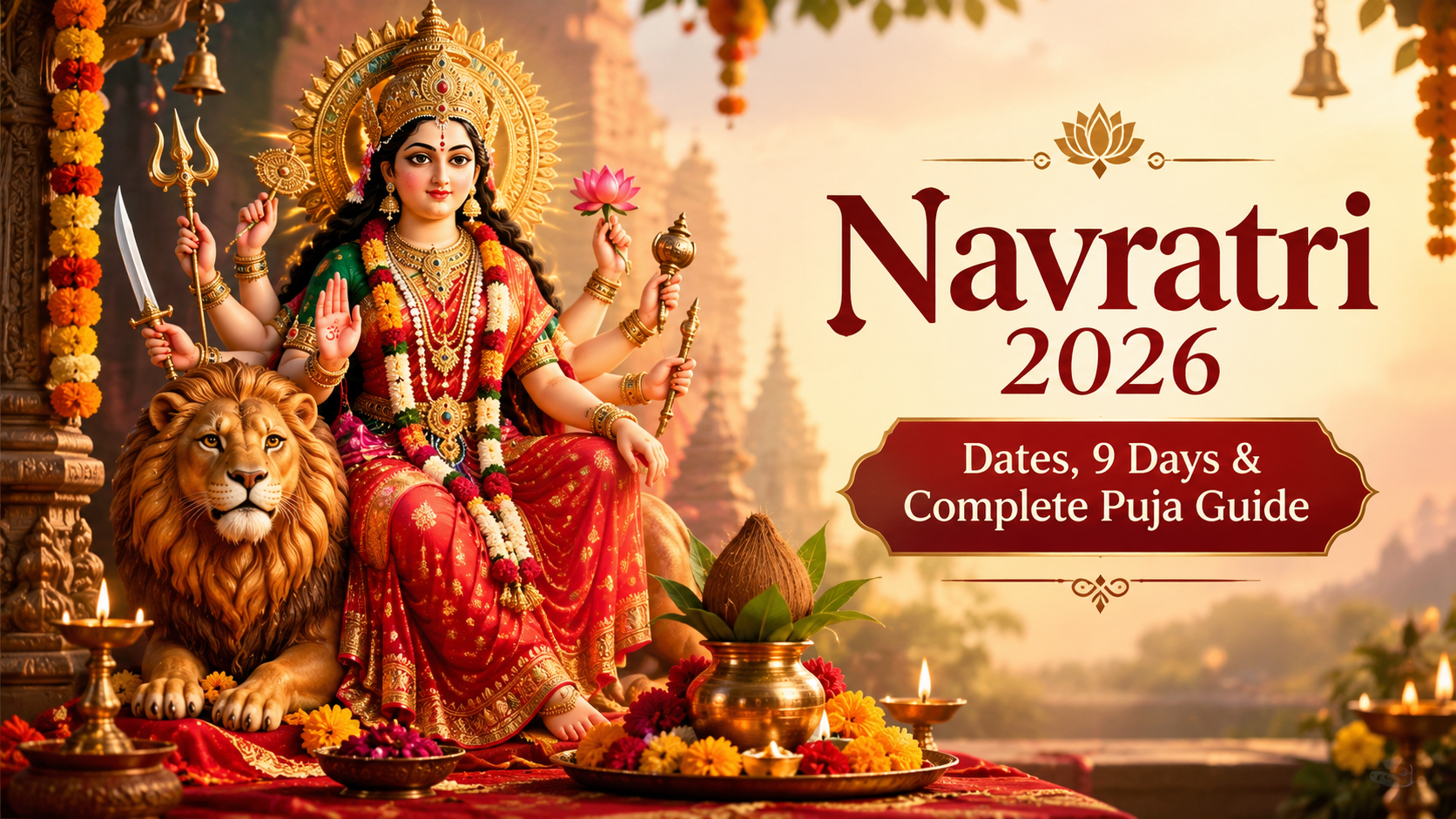
Navratri is one of the most sacred Hindu festivals dedicated to Maa Durga and her nine divine forms, collectively known as Navdurga. Celebrated over nine nights and ten days, Sharad Navratri is a time for devotion, fasting, prayer, meditation and the worship of Shakti, the divine feminine power.
In 2026, Sharad Navratri begins on October 11 and continues through October 19, with each of the nine days dedicated to a different form of Maa Durga. Devotees observe vrat, perform daily puja, chant mantras and seek the blessings of the Goddess for strength, prosperity, peace and spiritual growth. This complete guide to Navratri 2026 covers the dates, nine forms of Maa Durga, puja vidhi, Ghatasthapana, vrat rules, Navratri colours, important mantras and Kanya Pujan.
Navratri 2026 Dates
| Day | Date | Goddess |
|---|---|---|
| Day 1 | October 11, 2026 | Maa Shailputri |
| Day 2 | October 12, 2026 | Maa Brahmacharini |
| Day 3 | October 13, 2026 | Maa Chandraghanta |
| Day 4 | October 14, 2026 | Maa Kushmanda |
| Day 5 | October 15, 2026 | Maa Skandamata |
| Day 6 | October 16, 2026 | Maa Katyayani |
| Day 7 | October 17, 2026 | Maa Kalaratri |
| Day 8 | October 18, 2026 | Maa Mahagauri |
| Day 9 | October 19, 2026 | Maa Siddhidatri |
What Is Navratri?
The word Navratri comes from two Sanskrit words: Nava, meaning nine, and Ratri, meaning night. Thus, Navratri literally means nine nights. There are several Navratris observed during the Hindu calendar year, but Sharad Navratri, celebrated during the lunar month of Ashwin, is among the most important.
The festival celebrates the divine power of Maa Durga and her victory over evil. According to Hindu tradition, Goddess Durga fought the powerful demon Mahishasura for nine days and nights before defeating him on the tenth day. The tenth day is celebrated as Vijayadashami or Dussehra, symbolizing the victory of good over evil.
The 9 Forms of Maa Durga During Navratri
Day 1 – Maa Shailputri
Maa Shailputri is worshipped on the first day of Navratri. She is regarded as the daughter of the Himalayas and is depicted riding a bull with a trident in one hand and a lotus in the other. Devotees worship Maa Shailputri for strength, stability and spiritual growth.
Day 2 – Maa Brahmacharini
The second day is dedicated to Maa Brahmacharini, who represents devotion, penance and determination. She is depicted carrying a rosary and a kamandalu. Worshipping her is believed to inspire patience, peace and inner strength.
Day 3 – Maa Chandraghanta
Maa Chandraghanta is worshipped on the third day. She wears a crescent moon on her forehead and represents courage and divine protection. Devotees seek her blessings for peace, bravery and freedom from fear.
Day 4 – Maa Kushmanda
The fourth day is dedicated to Maa Kushmanda. She is traditionally associated with the creation and nurturing of the universe. Her worship is believed to bring health, prosperity, energy and positivity.
Day 5 – Maa Skandamata
Maa Skandamata is worshipped on the fifth day. She is the mother of Lord Kartikeya, also known as Skanda. She represents motherhood, compassion and protection.
Day 6 – Maa Katyayani
The sixth day is dedicated to Maa Katyayani, a powerful form of Goddess Durga. She is associated with courage, strength and the destruction of negative forces.
Day 7 – Maa Kalaratri
Maa Kalaratri is worshipped on the seventh day. Although her appearance is fierce, she is regarded as a protective form of Maa Durga. Devotees worship her for protection from fear, negativity and obstacles.
Day 8 – Maa Mahagauri
The eighth day is dedicated to Maa Mahagauri, who represents purity, peace and spiritual enlightenment. Many devotees perform Ashtami Puja on this day.
Day 9 – Maa Siddhidatri
Maa Siddhidatri is worshipped on the ninth and final day of Navratri. She is associated with spiritual wisdom, divine blessings and the fulfillment of sincere devotion.
Navratri Puja Vidhi
Step 1: Clean the Puja Area
Clean the home and especially the area where Maa Durga will be worshipped.
Step 2: Take a Sankalp
Begin the puja by taking a sincere sankalp or devotional intention for the Navratri observance.
Step 3: Light a Diya
Light a diya before Maa Durga. Ghee or oil may be used according to family tradition.
Step 4: Offer Flowers
Offer fresh flowers to the Goddess along with kumkum, akshat and other traditional puja items.
Step 5: Offer Bhog
Offer fruits, sweets or other sattvic food prepared according to your family’s tradition.
Step 6: Chant Mantras
Recite Maa Durga mantras, Durga Chalisa, Devi Kavach, Argala Stotram or other devotional prayers.
Step 7: Perform Aarti
Complete the puja with Maa Durga Aarti and seek the Goddess’s blessings.
Why Is Navratri Celebrated for Nine Days?
The nine days of Navratri represent the worship of the different manifestations of Shakti. Each form carries a distinct spiritual symbolism — from strength and determination to courage, purity, protection and spiritual wisdom. The festival reminds devotees of the power of divine feminine energy and the triumph of righteousness over negativity.
Conclusion
Navratri is not only a festival of worship but also a time for devotion, self-discipline, spiritual reflection and celebration of Shakti. The nine days invite devotees to remember the different forms of Maa Durga and seek her blessings for courage, wisdom, peace and prosperity.
As Navratri 2026 begins on October 11, devotees across India will come together through prayers, fasting, Garba, Dandiya, Durga Puja and other regional traditions to celebrate the divine power of Maa Durga.
May Maa Durga bless everyone with strength, happiness, peace and prosperity. Jai Mata Di!
