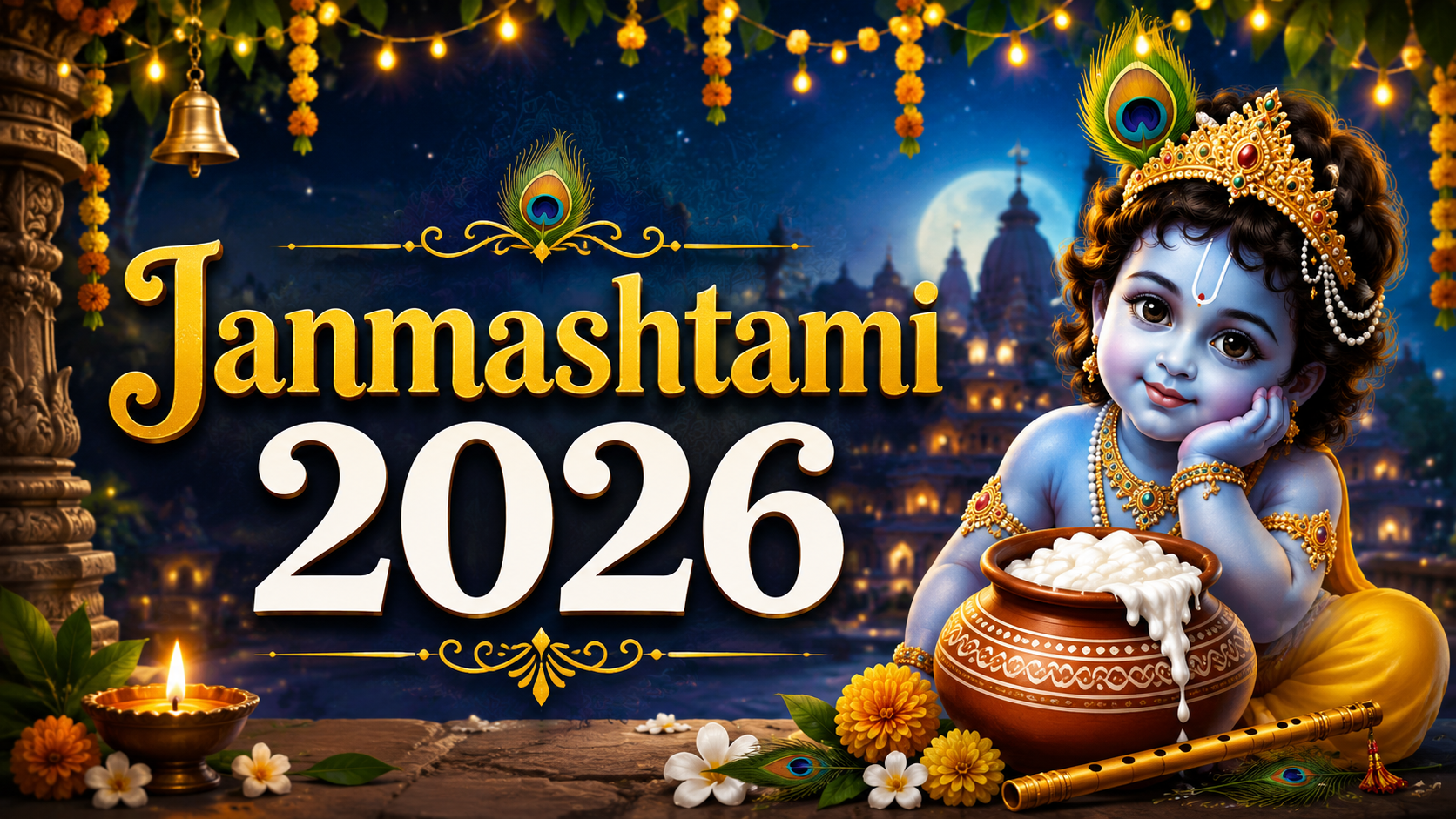
Janmashtami 2026 will be celebrated on Friday, September 4, 2026. Also known as Krishna Janmashtami, this important Hindu festival celebrates the birth of Lord Krishna, the eighth incarnation of Lord Vishnu.
Devotees observe Janmashtami with fasting, prayers, devotional songs, Krishna bhajans, temple visits and special midnight celebrations. The most important moment of the festival is the midnight worship, when devotees celebrate the divine birth of Lord Krishna.
Why Is Janmashtami Celebrated?
Janmashtami celebrates the birth of Lord Krishna, who is worshipped as an incarnation of Lord Vishnu. According to Hindu tradition, Krishna was born in Mathura to Devaki and Vasudeva. His birth took place during the reign of the cruel King Kamsa, who had imprisoned Devaki and Vasudeva because of a prophecy that Devaki’s eighth son would be responsible for his downfall.
Krishna’s birth represents the restoration of dharma and the triumph of good over evil. His life and teachings have had a profound influence on Hindu spirituality and devotional traditions.
Why Is Krishna Janmashtami Celebrated at Midnight?
One of the most distinctive features of Janmashtami is its midnight celebration. According to traditional accounts, Lord Krishna was born at midnight in Mathura. Therefore, devotees wait until the sacred midnight period, known as Nishita Kaal, to perform special prayers and celebrate Krishna’s birth.
At midnight, temples and homes may perform an abhishek of the Krishna idol, dress the deity in new clothes, place Bal Krishna in a decorated cradle and offer flowers, sweets and other devotional offerings. The exact Nishita Kaal timing varies according to location, so devotees should refer to their local Panchang for the precise timing.
The Story of Lord Krishna’s Birth
Lord Krishna was born to Devaki and Vasudeva in a prison in Mathura. Devaki’s brother, King Kamsa, had learned from a divine prophecy that Devaki’s eighth child would become the cause of his downfall. Fearing the prophecy, he imprisoned Devaki and Vasudeva. When Krishna was born, Vasudeva was able to take the newborn child out of Mathura and carry him to Gokul. He entrusted Krishna to Nanda Baba and Yashoda, who raised him with love.
Krishna’s childhood in Gokul and Vrindavan is filled with beloved stories of his playful nature, his love for butter, his flute and his devotion-inspiring relationship with the people of Vraja.
How Is Janmashtami Celebrated?
Janmashtami is celebrated with great devotion across India and by Krishna devotees around the world.
- Common traditions include:
- Observing a Janmashtami vrat
- Visiting Krishna and Vishnu temples
- Decorating homes and temples with flowers and lights
- Placing Bal Krishna in a decorated cradle
- Singing Krishna bhajans and devotional songs
- Chanting Krishna’s names and mantras
- Performing special puja around midnight
- Offering sweets, fruits and other bhog
- Listening to stories about Krishna’s life and childhood
Mathura and Vrindavan are particularly famous for their grand Janmashtami celebrations because of their close connection with Lord Krishna.
Janmashtami Vrat and Fasting
Fasting is an important part of Janmashtami for many devotees. Some devotees observe a strict fast, while others consume fruits, milk and foods permitted during religious fasting. The practices can differ according to regional customs, family traditions and individual beliefs.
Many devotees continue their fast until the midnight celebration of Krishna’s birth. The exact time for Parana, or breaking the fast, should be followed according to the local Panchang and one’s tradition.
What Is Dahi Handi?
Dahi Handi is a popular Krishna tradition, particularly celebrated in Maharashtra. The tradition is inspired by stories of Bal Krishna, who was lovingly known as Makhan Chor because of his playful love for butter and curd.
During Dahi Handi celebrations, an earthen pot filled with curd or other offerings is hung high above the ground. Groups of participants, known as Govindas, form human pyramids to reach and break the pot.
Dahi Handi is closely connected with Krishna’s childhood and the Janmashtami season, although it is a distinct celebration with its own regional traditions.
The Significance of Janmashtami
Janmashtami is more than a celebration of Krishna’s birth. It carries a deep spiritual message for devotees. Lord Krishna’s life and teachings emphasize dharma, devotion, wisdom and righteous action. His teachings in the Bhagavad Gita continue to inspire people across generations.
The festival reminds devotees that when righteousness declines and injustice grows, divine consciousness can restore balance and guide humanity back toward the path of dharma. For devotees, Janmashtami is therefore a time for prayer, self-reflection, devotion and remembering the teachings of Lord Krishna.
Conclusion
Janmashtami 2026 will be celebrated on Friday, September 4, 2026, marking the sacred birth of Lord Krishna. For millions of devotees, it is a day of fasting, prayer, bhajans, puja and joyful remembrance of Krishna’s divine life and teachings.
The midnight celebration holds special significance because Lord Krishna is traditionally believed to have been born at midnight. As devotees welcome the birth of Bal Gopal with prayers, devotional songs and offerings, Janmashtami becomes a beautiful reminder of faith, hope and the eternal victory of dharma over adharma.
Whether you celebrate Janmashtami at home or in a temple, observe a vrat, sing Krishna bhajans or simply spend a few moments remembering Lord Krishna, the festival offers an opportunity to connect with devotion and spirituality.
May the blessings of Lord Krishna bring peace, happiness and prosperity to you and your family. Jai Shri Krishna!
