

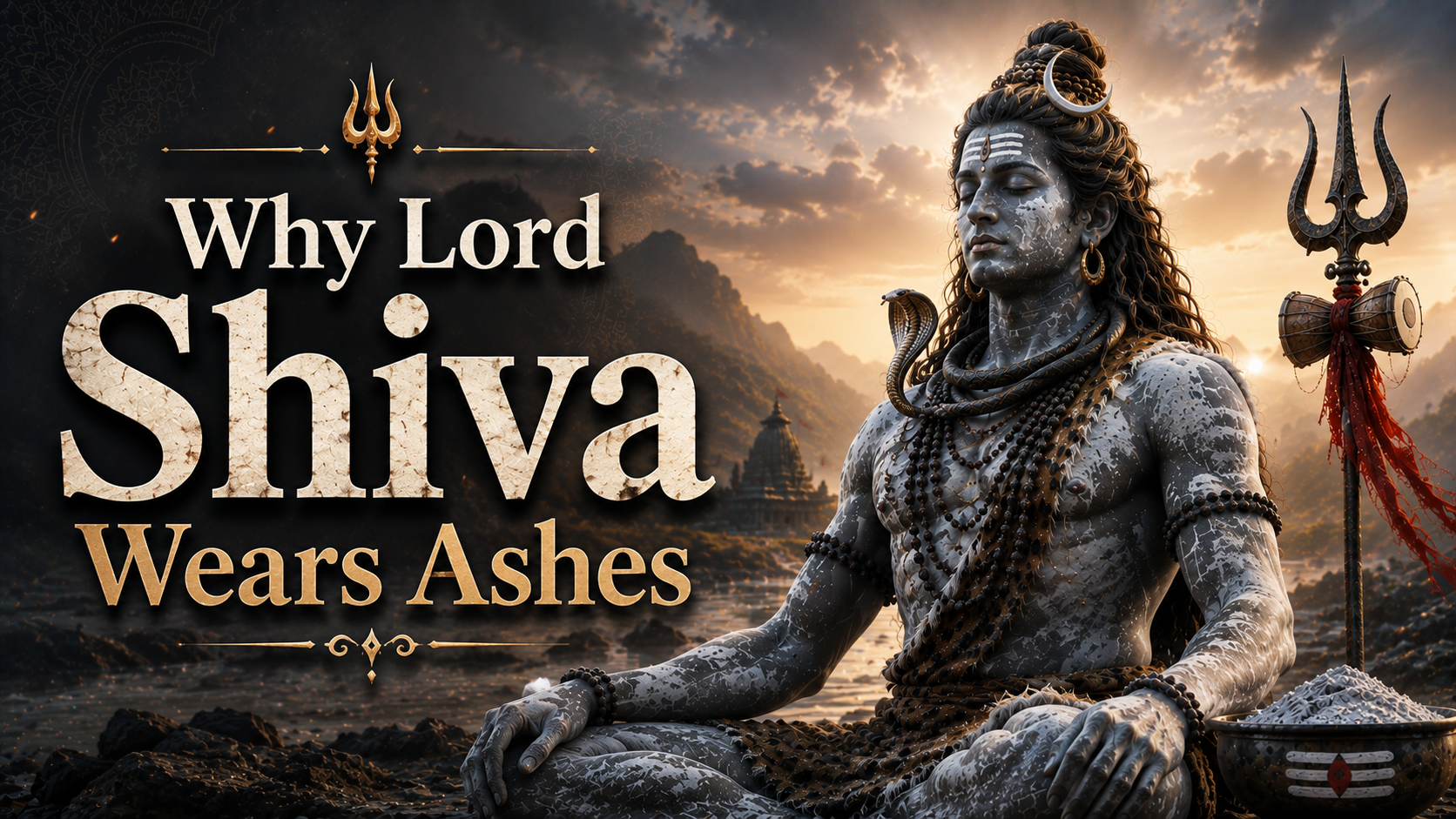
Among all the forms of Hindu deities, Lord Shiva stands apart with his extraordinary appearance. He is adorned with matted hair, a crescent moon, the sacred River Ganga flowing from his locks, serpents around his neck, a tiger skin as his garment, and sacred ash (Bhasma or Vibhuti) covering his entire body.
For many devotees, this raises an intriguing question: Why does Lord Shiva wear ashes instead of precious ornaments or royal garments?
The answer goes far beyond appearance. Shiva’s sacred ash represents profound spiritual truths about life, death, detachment, purity, and liberation. Every particle of Bhasma reminds humanity that the physical body is temporary while the soul is eternal.
What Is Bhasma?
The Sanskrit word Bhasma literally means “that which has been reduced to ashes.” It is also known as Vibhuti, meaning glory, prosperity, or divine power. Traditionally, sacred Bhasma is prepared from purified cow dung cakes or from the ashes of sacred fire (Yajna) through Vedic rituals. Devotees often apply three horizontal lines of Bhasma across the forehead, known as the Tripundra.
The Symbolism of Ashes
Ashes represent the complete destruction of ego, attachment, ignorance, and desire. Once something becomes ash, it cannot be burned again. Shiva wears ashes to remind humanity that everything material eventually returns to dust.
Bhasma Represents the Impermanence of Life
The human body eventually returns to the five elements—earth, water, fire, air, and space. After cremation, the body becomes ashes. Shiva teaches that rather than becoming attached to wealth, beauty, or status, one should seek spiritual realization.
Lord Shiva Lives Beyond Material Illusions
Unlike deities adorned with jewels, Shiva chooses simplicity. He resides on Mount Kailash, meditates in silence, and wears ashes instead of ornaments, showing that gold and ash are equal before the eternal truth.
Why Is Shiva Associated with Cremation Grounds?
Lord Shiva is called Shmashana Vasi—the One who dwells in cremation grounds. There, all worldly identities disappear. Whether king or beggar, every body becomes ash. This teaches humility and the importance of karma over material achievements.
The Spiritual Meaning of Tripundra
The three horizontal lines symbolize the destruction of ego, ignorance, and karma. They also represent the three gunas and the cosmic cycle of creation, preservation, and dissolution. The bindu above them represents Supreme Consciousness.
Bhasma in Shaivism
Sacred ash signifies purity, detachment, spiritual awakening, and Shiva’s grace. Applying Bhasma is a reminder that inner purity matters more than outward appearance.
Traditional Perspective
Vibhuti has long held an honored place in Hindu ritual and Shaiva traditions. While some traditional practices attribute cleansing properties to it, its primary significance is spiritual rather than medical.
Lessons From Shiva’s Ashes
- Everything is temporary.
- Let go of ego.
- Live simply.
- Accept change.
- Focus on the eternal soul instead of temporary pleasures.
Conclusion
Lord Shiva’s sacred ash is a timeless symbol of humility, detachment, purity, and liberation. It reminds us that while the body and material possessions fade, the soul is eternal. By wearing Bhasma, Shiva inspires humanity to transcend ego, embrace simplicity, and seek the highest spiritual truth.
