

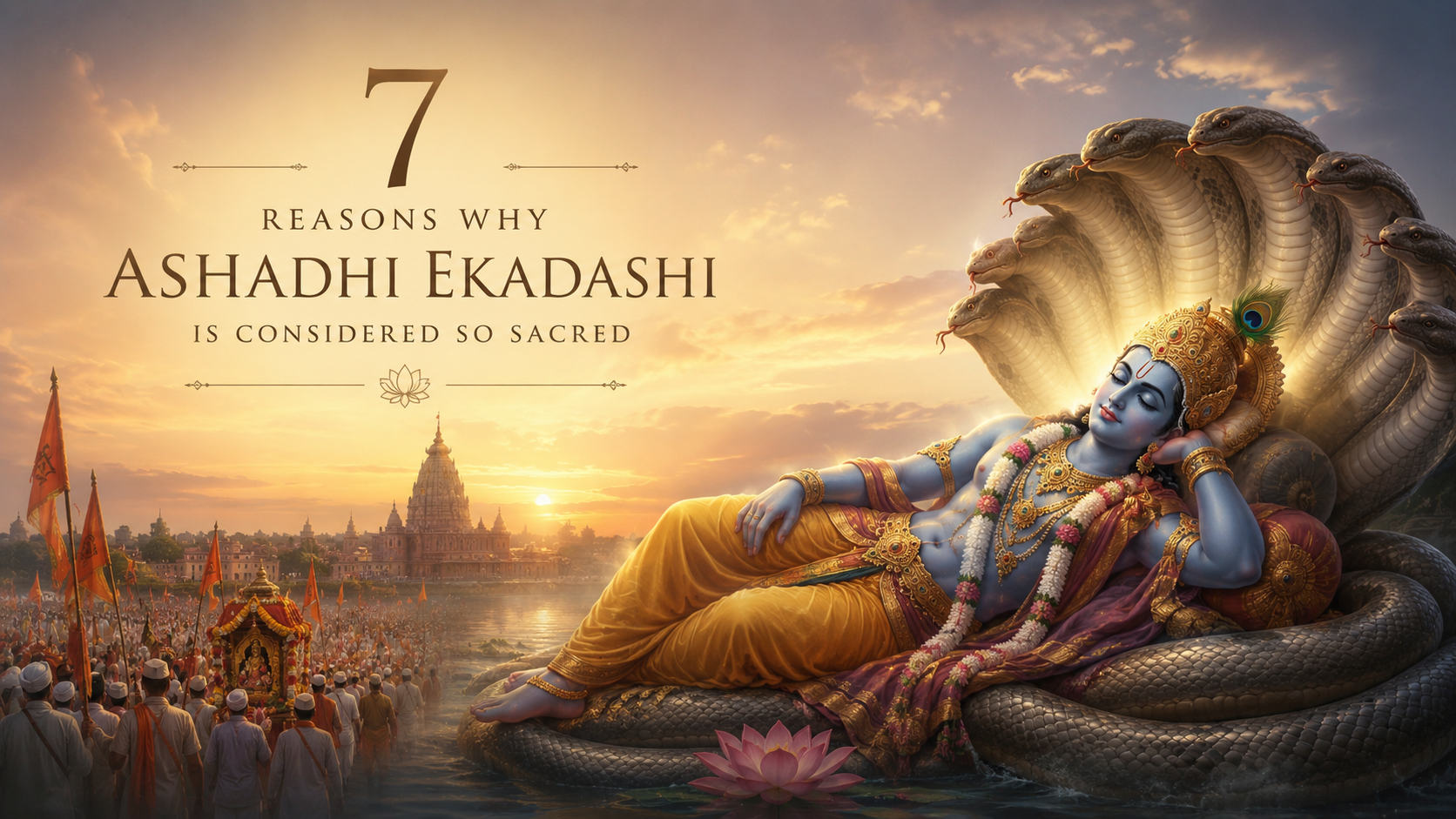
Ashadhi Ekadashi, also known as Devshayani Ekadashi, is one of the holiest days in the Hindu calendar. Observed during the bright fortnight (Shukla Paksha) of the Ashadha month, this sacred Ekadashi marks the beginning of Lord Vishnu’s four-month Yoga Nidra (divine cosmic sleep), a period known as Chaturmas.
Across India, millions of devotees observe fasting, chant the names of Lord Vishnu, read sacred scriptures, and participate in devotional processions. In Maharashtra, the grand Pandharpur Wari culminates on Ashadhi Ekadashi, where countless devotees walk for days to seek the blessings of Lord Vitthal, an incarnation of Lord Vishnu.
But what makes this Ekadashi so special? Why has it been revered for thousands of years?
Here are seven powerful reasons why Ashadhi Ekadashi is considered one of the most sacred festivals in Hinduism.
It Marks the Beginning of Lord Vishnu’s Divine Yoga Nidra
The foremost reason Ashadhi Ekadashi is considered sacred is that it marks the day when Lord Vishnu enters Yoga Nidra, a deep meditative state rather than ordinary sleep.
According to Hindu scriptures, Lord Vishnu rests upon Sheshnag in the Kshira Sagara (Ocean of Milk) for four months. During this period, He continues to sustain the universe through His divine consciousness while remaining absorbed in spiritual rest.
This period lasts until Prabodhini Ekadashi (Dev Uthani Ekadashi) in the month of Kartik.
This symbolic event teaches devotees that even the Supreme Lord observes periods of inward reflection, reminding humanity of the importance of spiritual discipline and self-awareness.
It Begins the Holy Period of Chaturmas
Ashadhi Ekadashi officially marks the start of Chaturmas, one of the most spiritually significant periods in Hinduism.
For four months:
- Saints stay in one place instead of traveling.
- Many devotees observe special vows (vratas).
- Increased chanting, meditation, and scriptural study are encouraged.
- Weddings and many auspicious ceremonies are generally postponed.
Chaturmas is considered an ideal time to strengthen one’s spiritual practices and reduce worldly distractions.
Because Ashadhi Ekadashi opens this sacred season, it holds exceptional spiritual importance.
Fasting on This Day Is Believed to Remove Sins
The Padma Purana and several other Hindu scriptures praise the spiritual benefits of observing the Ekadashi fast.
Devotees believe that sincere fasting on Ashadhi Ekadashi helps:
- Purify the mind
- Reduce attachment to material desires
- Wash away accumulated sins (Papa)
- Increase positive karma
- Bring devotees closer to Lord Vishnu
While many people observe a complete fast, others consume fruits, milk, or Ekadashi-approved foods according to their health and tradition.
The spiritual value lies not only in avoiding food but also in controlling the senses and focusing the mind on God.
It Is Deeply Connected to Lord Vitthal of Pandharpur
Ashadhi Ekadashi holds extraordinary significance in Maharashtra because it is dedicated to Lord Vitthal (Vithoba).
For centuries, the Pandharpur Wari has been one of India’s greatest devotional pilgrimages.
Lakhs of devotees known as Warkaris walk hundreds of kilometers while singing:
- Abhangas
- Bhajans
- Kirtans
- The divine names of Lord Vitthal
The journey is considered an act of devotion rather than merely a pilgrimage.
The atmosphere in Pandharpur during Ashadhi Ekadashi is filled with devotion, humility, equality, and collective prayer, making it one of Hinduism’s most spiritually uplifting celebrations.
It Encourages Self-Discipline and Inner Purification
Ashadhi Ekadashi is much more than a festival—it is a reminder to practice self-control.
The observance encourages devotees to:
- Speak truthfully
- Avoid anger
- Practice kindness
- Control desires
- Spend time in prayer
- Help those in need
Fasting becomes a tool for mastering the mind rather than merely avoiding food. Many spiritual teachers explain that controlling physical desires creates space for inner peace and devotion. This makes Ashadhi Ekadashi a day of transformation rather than ritual alone.
Scriptures Describe It as Highly Meritorious
Ancient Hindu scriptures repeatedly emphasize the greatness of Ekadashi.
According to the Bhavishya Purana, Padma Purana, and other sacred texts, observing Ekadashi with sincere devotion pleases Lord Vishnu immensely.
Devotees believe that worship performed on this day yields greater spiritual merit than on ordinary days.
Common practices include:
- Chanting the Vishnu Sahasranama
- Reading the Bhagavad Gita
- Reciting the Bhagavata Purana
- Singing devotional bhajans
- Visiting Vishnu and Vitthal temples
The day is regarded as an excellent opportunity for spiritual growth through devotion and remembrance of God.
It Symbolizes Surrender to the Divine
Perhaps the deepest reason Ashadhi Ekadashi is sacred is its spiritual symbolism.
Lord Vishnu’s Yoga Nidra represents:
- Trust in divine timing
- Cosmic balance
- Inner stillness
- Faith during periods of waiting
- Spiritual surrender
Life constantly moves through cycles of activity and rest. Ashadhi Ekadashi reminds devotees that growth often happens in silence, patience, and faith. Rather than constantly chasing worldly success, this sacred day encourages believers to surrender their worries to God and strengthen their relationship with the Divine.
How Devotees Observe Ashadhi Ekadashi
The observance varies across regions and traditions, but common practices include:
- Observing an Ekadashi fast
- Waking up before sunrise
- Bathing and wearing clean clothes
- Offering Tulsi leaves to Lord Vishnu
- Chanting “Om Namo Bhagavate Vasudevaya”
- Reciting Vishnu Sahasranama
- Reading the Bhagavad Gita
- Visiting Vishnu or Vitthal temples
- Performing bhajans and kirtans
- Donating food, clothes, or essentials to those in need
- Remaining engaged in prayer throughout the day
Spiritual Lessons from Ashadhi Ekadashi
Beyond rituals, Ashadhi Ekadashi offers timeless spiritual wisdom:
- Patience leads to inner growth.
- Discipline strengthens faith.
- Simplicity brings peace.
- Devotion is more important than material wealth.
- God is remembered best through humility.
- Every period of rest prepares us for renewal.
- Spiritual progress begins with self-control.
These teachings remain relevant even in modern life, encouraging balance between worldly responsibilities and spiritual well-being.
Conclusion
Ashadhi Ekadashi is much more than a date on the Hindu calendar. It marks the beginning of Lord Vishnu’s Yoga Nidra, the commencement of Chaturmas, and a period dedicated to devotion, reflection, and inner transformation.
Whether through fasting, prayer, chanting, or acts of kindness, devotees use this sacred day to deepen their connection with the Divine. Its enduring significance lies not only in ancient traditions but also in the universal values it represents—discipline, faith, humility, and surrender.
For millions of Hindus around the world, Ashadhi Ekadashi continues to inspire spiritual renewal and remind us that true peace comes from turning inward and placing our trust in the Divine.
