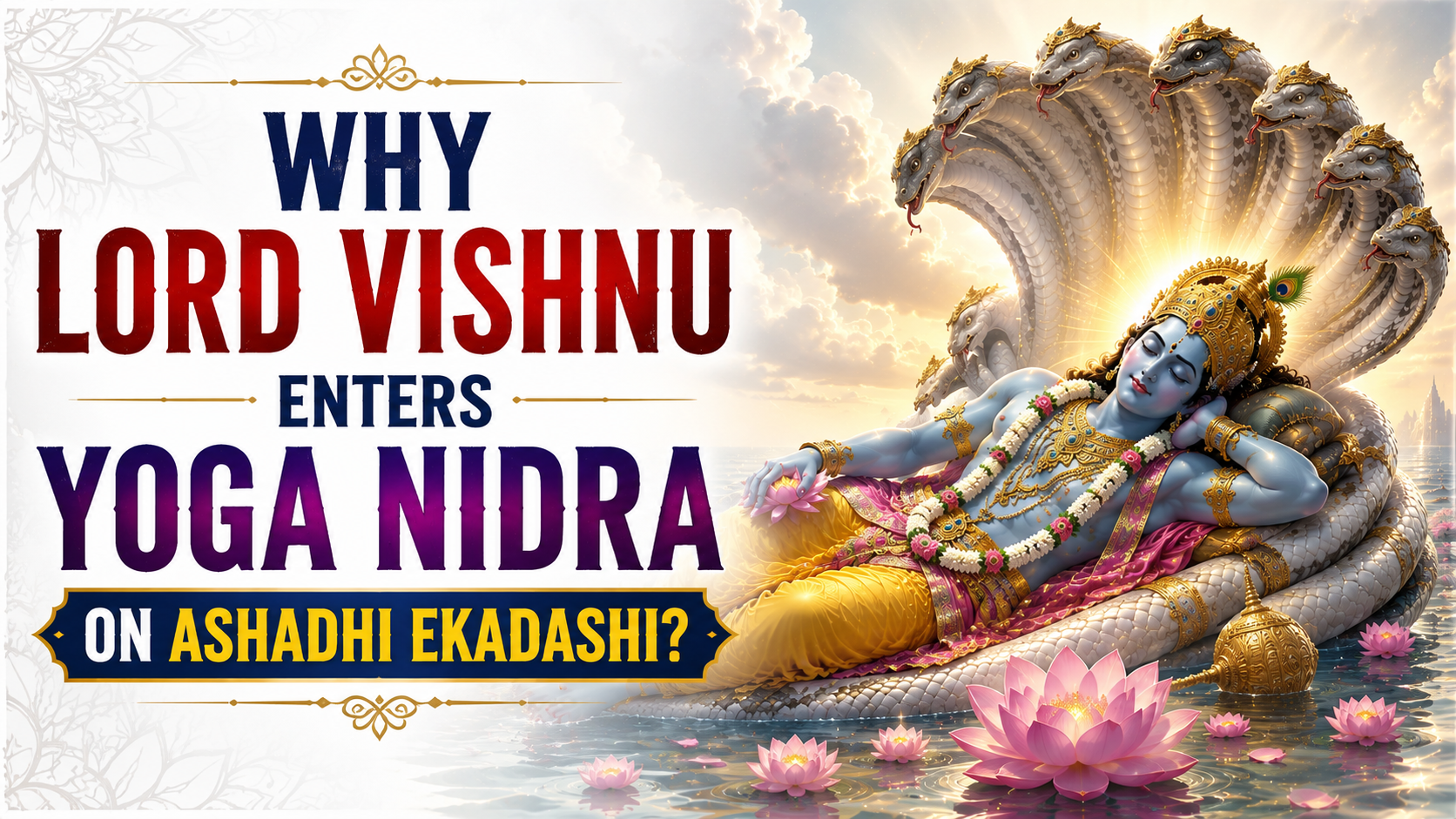
Ashadhi Ekadashi, also known as Devshayani Ekadashi, is one of the most sacred days in the Hindu calendar. Celebrated during the Shukla Paksha (waxing phase of the Moon) in the month of Ashadha, this holy occasion marks the beginning of Lord Vishnu’s divine slumber, known as Yoga Nidra. Millions of devotees observe fasting, chant Vishnu mantras, and participate in spiritual activities to seek the blessings of the Preserver of the Universe.
But why does Lord Vishnu enter Yoga Nidra on Ashadhi Ekadashi? What is the spiritual significance of this divine sleep? Understanding the story and symbolism behind this sacred event can help devotees deepen their connection with Lord Vishnu and appreciate the wisdom hidden in Hindu traditions.
What Is Ashadhi Ekadashi?
Ashadhi Ekadashi is widely celebrated across India, especially in Maharashtra, Gujarat, Karnataka, and other regions where devotion to Lord Vishnu and Lord Vitthal is prominent. The day is also known as Devshayani Ekadashi, which literally means “the Ekadashi when the Lord goes to sleep.”
According to Hindu scriptures, Lord Vishnu enters Yoga Nidra on this day and remains in this mystical state for four months. This sacred period is called Chaturmas, which concludes on Prabodhini Ekadashi in the month of Kartik when Lord Vishnu awakens.
The beginning of Chaturmas is considered a highly spiritual period dedicated to prayer, self-discipline, charity, fasting, and devotion.
What Is Yoga Nidra?
The term Yoga Nidra does not refer to ordinary sleep. It is a divine and conscious state of rest.
In Hindu philosophy, Lord Vishnu is never inactive. Even while resting on the cosmic serpent Shesha Naga in the Kshira Sagara (Ocean of Milk), He continues to sustain and protect the universe. His Yoga
Nidra represents a state of supreme awareness where creation, preservation, and cosmic balance continue effortlessly.
Unlike human sleep, which is associated with unconsciousness, Yoga Nidra symbolizes::
- Divine contemplation
- Cosmic balance
- Spiritual renewal
- Inner awareness
- Preparation for future creation
Thus, Lord Vishnu’s Yoga Nidra is a powerful symbol of the universe entering a phase of reflection and spiritual transformation.
The Story Behind Lord Vishnu’s Divine Sleep
Ancient Hindu scriptures explain that after maintaining cosmic order and protecting creation, Lord Vishnu enters Yoga Nidra during the monsoon season.
The four-month period of Chaturmas coincides with the rainy season in India. Traditionally, travel became difficult during this time due to heavy rains. As a result, sages, monks, and spiritual seekers would remain in one place, dedicating themselves to meditation, scriptural study, and spiritual practices.
Lord Vishnu’s symbolic sleep encourages devotees to slow down their worldly activities and focus on inner growth. The message is clear: while the Lord rests in divine consciousness, devotees should also turn inward and strengthen their spiritual lives.
Why Does Lord Vishnu Enter Yoga Nidra?
To Mark the Beginning of Chaturmas
One of the primary reasons Lord Vishnu enters Yoga Nidra is to signal the beginning of Chaturmas. This four-month period is regarded as highly auspicious for spiritual practices.
Devotees Observe:
- Fasting and austerities
- Daily prayers
- Charity and service
- Recitation of sacred texts
- Increased devotion to God
To Encourage Inner Reflection
Modern life often keeps people busy with endless responsibilities and distractions. The symbolism of Yoga Nidra teaches the importance of pausing and looking inward.
Just as Lord Vishnu enters a state of divine rest, devotees are encouraged to:
- Reflect on their actions
- Purify their thoughts
- Practice self-control
- Strengthen their faith
Ashadhi Ekadashi becomes a reminder that true spiritual growth begins within.
To Maintain Cosmic Balance
In Hindu cosmology, Lord Vishnu is the sustainer of the universe. His Yoga Nidra is not an absence of activity but a deeper state of cosmic regulation.
The universe functions under His divine supervision even during His mystical rest. This symbolizes that divine energy continues to guide creation, even when it appears inactive.
The lesson for devotees is profound: periods of stillness are often as important as periods of action.
To Inspire Spiritual Discipline
Chaturmas has traditionally been a period of vows and spiritual commitments. Many devotees give up certain foods, habits, or comforts during these four months. Lord Vishnu’s Yoga Nidra inspires devotees to cultivate:
- Patience
- Simplicity
- Self-restraint
- Compassion
- Devotion
To Symbolize the Cycles of Creation
Hindu philosophy recognizes that creation operates through cycles of activity and rest. Day follows night, seasons change, and life itself moves through phases of growth and renewal.
Lord Vishnu’s Yoga Nidra represents the cosmic principle that rest is not the opposite of progress. Rather, it is a necessary phase that allows transformation and regeneration.
Spiritual Significance of Ashadhi Ekadashi
The Importance of Rest
In a world focused on constant productivity, Lord Vishnu’s Yoga Nidra teaches that rest and reflection are essential for maintaining balance and wisdom.
The Power of Devotion
Devotees use this day to strengthen their connection with God through prayer, chanting, and fasting.
The Value of Self-Discipline
Observing Ekadashi fasts helps cultivate control over desires and develop mental strength.
The Practice of Surrender
By worshipping Lord Vishnu, devotees learn to surrender worries and place their trust in divine guidance.
How Devotees Observe Ashadhi Ekadashi
On Ashadhi Ekadashi, devotees across India engage in various religious practices, including:
Fasting
Many devotees observe a strict fast, consuming only fruits, milk, or simple foods. Some maintain a complete fast until the following day.
Chanting Vishnu Mantras
- Om Namo Bhagavate Vasudevaya
- Om Namo Narayanaya
- Vishnu Sahasranama
Reading Sacred Texts
- Bhagavad Gita
- Vishnu Purana
- Srimad Bhagavatam
Performing Charity
Donations to the needy and acts of kindness are considered especially meritorious during this period.
Connection with Lord Vitthal and Pandharpur Wari
In Maharashtra, Ashadhi Ekadashi holds immense significance due to the famous Pandharpur Wari pilgrimage. Lakhs of devotees walk for days carrying palkhis (palanquins) of saints such as Sant Dnyaneshwar and Sant Tukaram to seek the blessings of Lord Vitthal, who is regarded as a form of Lord Vishnu.
The Wari represents devotion, humility, equality, and unwavering faith. It beautifully complements the spiritual message of Ashadhi Ekadashi and Lord Vishnu’s Yoga Nidra.
Conclusion
Lord Vishnu’s entry into Yoga Nidra on Ashadhi Ekadashi is a profound spiritual symbol rather than a simple mythological event. It marks the beginning of Chaturmas, a sacred period dedicated to self-reflection, devotion, discipline, and inner transformation.
Through Yoga Nidra, Lord Vishnu teaches that periods of rest, contemplation, and spiritual practice are essential for maintaining balance in life. As devotees observe Ashadhi Ekadashi through fasting, prayer, and devotion, they align themselves with the deeper wisdom of the universe and move closer to spiritual awakening.
Ashadhi Ekadashi reminds us that sometimes the greatest growth occurs not through constant activity, but through silence, reflection, and connection with the Divine.
