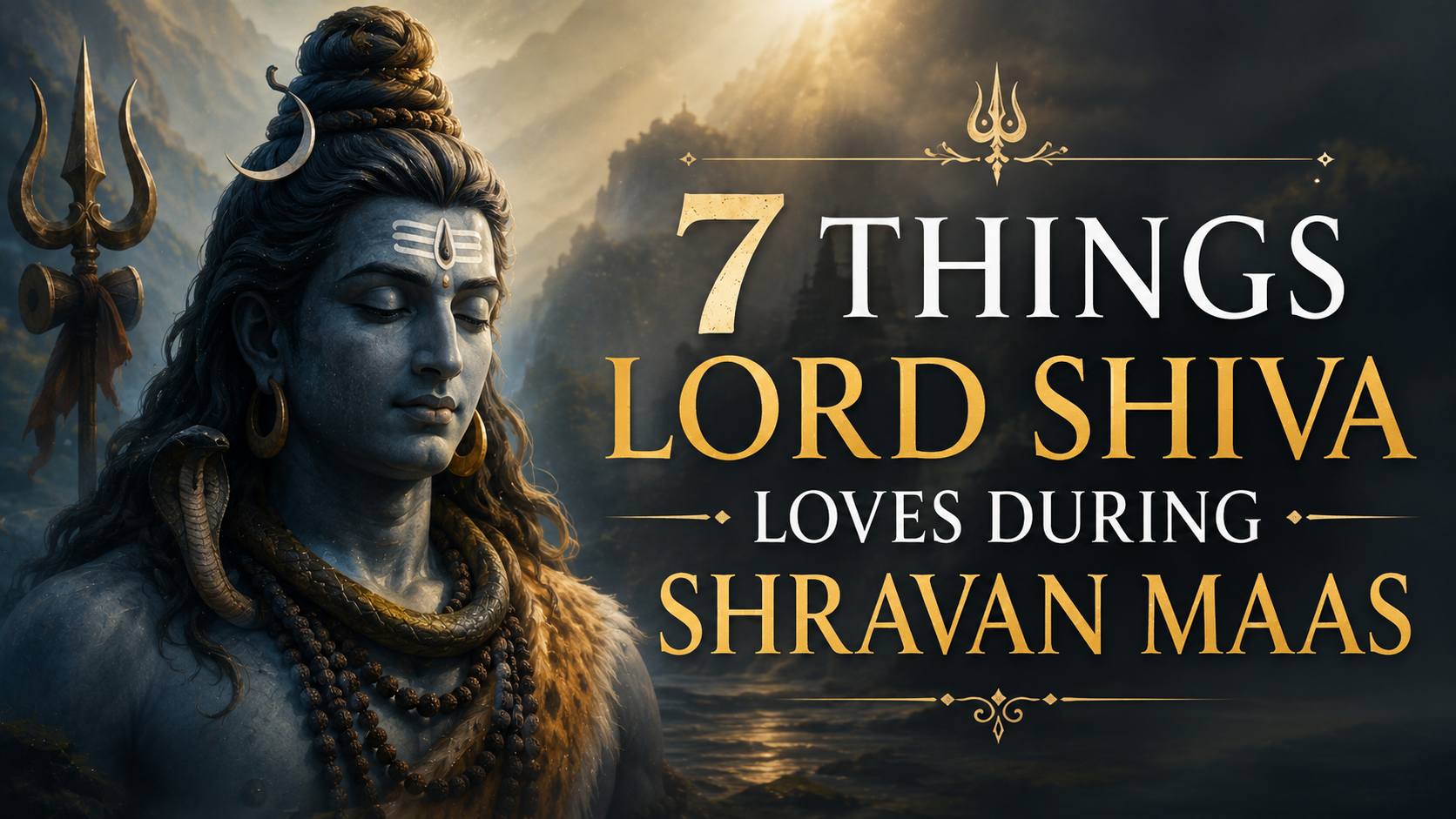
Shravan Maas (also known as Sawan) is considered one of the holiest months in Hinduism, especially for devotees of Lord Shiva. Across India, millions observe fasts, visit Shiva temples, perform Rudrabhishek, chant “Om Namah Shivaya,” and offer sacred items to the Shivling with deep devotion.
According to Hindu scriptures such as the Shiva Purana, Skanda Purana, Padma Purana, and Linga Purana, worship performed during Shravan Maas is believed to yield immense spiritual merit. It is said that sincere prayers offered during this month are especially powerful because Lord Shiva is easily pleased by pure devotion.
While many devotees know what to offer, fewer understand why these offerings are important and what they symbolize.
Here are seven things Lord Shiva is traditionally believed to love during Shravan Maas, along with their spiritual significance.
1. Bilva (Bel) Leaves – Lord Shiva’s Most Beloved Offering
No offering to Lord Shiva is considered more sacred than the Bilva (Bel) leaf.
The Bilva leaf usually has three leaflets, symbolizing:
- Lord Shiva’s three eyes
- The Trimurti (Brahma, Vishnu, and Mahesh)
- The three Gunas (Sattva, Rajas, and Tamas)
- Past, present, and future
The Shiva Purana states that offering fresh Bilva leaves with devotion helps remove sins and brings peace and prosperity.
How to Offer
- Wash the leaves with clean water.
- Ensure they are fresh and not damaged.
- Place them gently on the Shivling while chanting “Om Namah Shivaya.”
Avoid using dried or insect-eaten leaves whenever possible.
2. Pure Water and Gangajal
During Shravan Maas, devotees continuously perform Jalabhishek, pouring water over the Shivling.
Water symbolizes:
- Purity
- Calmness
- Humility
- The flow of life
Gangajal (water from the River Ganga) holds even greater significance because Goddess Ganga is believed to reside in Lord Shiva’s matted hair. According to tradition, offering Gangajal helps purify the mind and invites divine blessings.
Many devotees also undertake the Kanwar Yatra, carrying holy Ganga water over long distances to offer it to Shiva during Shravan.
3. Raw Cow’s Milk
Milk is another popular offering made during Shiva Abhishek.
It represents:
- Purity
- Compassion
- Nourishment
- Peace
Many devotees believe that milk cools the fiery energy associated with Lord Shiva. After offering milk, temples often wash the Shivling with water to maintain cleanliness and avoid residue.
4. Dhatura and Bhang
One of the most unique offerings to Lord Shiva is Dhatura. According to Hindu tradition, Dhatura emerged during the Samudra Manthan and became associated with Lord Shiva after He consumed the deadly poison (Halahala) to save the universe.
Similarly, Bhang is traditionally offered in certain temples and regions, especially on Shivratri and during Shravan.
These offerings symbolize:
- Renunciation
- Detachment
- Mastery over worldly desires
Important: These practices are rooted in specific traditions and temple customs. Devotees should follow local customs and avoid using intoxicants irresponsibly.
5. White Flowers
Lord Shiva is especially associated with simplicity.
White flowers symbolize:
- Peace
- Purity
- Inner silence
- Spiritual surrender
Common flowers offered include:
- White lotus
- Jasmine
- Kaner (Oleander)
- Aparajita (where traditionally accepted)
Avoid flowers that are considered unsuitable according to your local temple traditions. The most important offering is always sincere devotion rather than expensive flowers.
6. Rudraksha
According to legend, Rudraksha beads originated from the tears of Lord Shiva. Although Rudraksha is primarily worn by devotees, it is also offered during Shiva worship. Different Mukhi Rudraksha beads are believed to carry different spiritual significance.
Many devotees:
- Place Rudraksha near the Shivling.
- Chant mantras using a Rudraksha mala.
- Wear energized Rudraksha during Shravan Maas.
The Rudraksha symbolizes:
- Protection
- Spiritual discipline
- Meditation
- Divine connection
7. Devotion Through Mantra Chanting
Perhaps the offering Lord Shiva loves the most is pure devotion (Bhakti). Scriptures repeatedly emphasize that heartfelt prayer is more valuable than elaborate rituals.
Some of the most powerful Shiva mantras include:
Om Namah Shivaya
The Panchakshari Mantra, considered one of the greatest mantras for peace and liberation.
Maha Mrityunjaya Mantra
Chanted for:
- Health
- Protection
- Courage
- Spiritual strength
Many devotees chant:
- 108 times daily
- During Rudrabhishek
- Every Monday of Shravan
Even a few sincere repetitions each day are believed to bring inner calm.
Tips for Worship During Shravan Maas
- Wake up early and bathe before पूजा.
- Wear clean, preferably light-colored clothes.
- Offer water and Bilva leaves to the Shivling.
- Chant “Om Namah Shivaya” at least 108 times.
- Observe Monday fasts if your health permits.
- Visit a Shiva temple.
- Read the Shiva Purana or listen to Shiva Katha.
- Practice charity and help those in need.
- Avoid anger, harsh speech, and negative thoughts.
- Maintain purity in thoughts, words, and actions.
Common Mistakes to Avoid
- Offering stale Bilva leaves.
- Placing Tulsi leaves on the Shivling (Tulsi is generally offered to Lord Vishnu, not Shiva, according to traditional practice).
- Wasting milk or other offerings.
- Performing rituals without understanding their significance.
- Hurting others while expecting spiritual merit.
- Treating rituals as more important than sincere devotion.
Final Thoughts
Shravan Maas is much more than a month of rituals—it is an opportunity for inner transformation. Whether you offer Bilva leaves, Gangajal, milk, flowers, or simply chant “Om Namah Shivaya” with a sincere heart, every act of devotion carries spiritual meaning.
Ultimately, the greatest offering to Lord Shiva is a pure heart, a disciplined mind, and a life guided by compassion, humility, and truth. By combining traditional worship with righteous conduct, devotees can make the most of this sacred month and experience the deeper essence of Shiva Bhakti.
